
Wood-Look Porcelain Tile: A Durable Alternative to Hardwood
Customers often wonder if the popularity of wood look porcelain tiles is just a passing trend. To make an informed investment, it’s crucial to understand the differences between wood look porcelain tile and other wood-like products.
Porcelain Tile: A Superior Product.
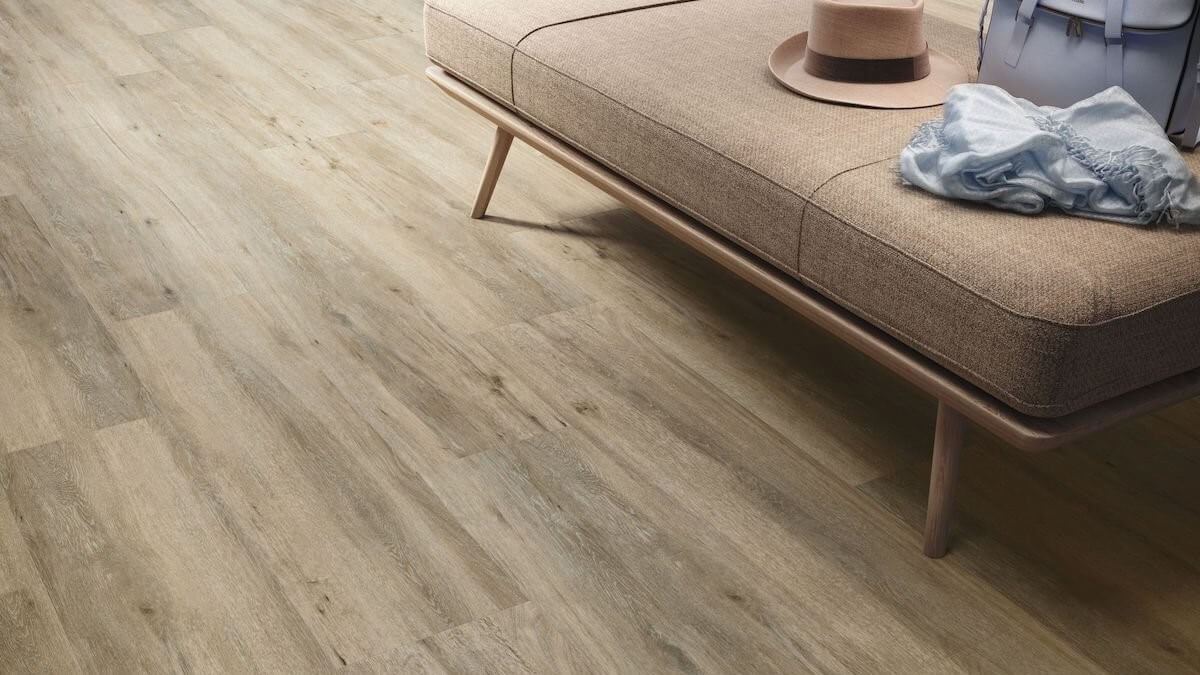
The term “Wood Look” refers to flooring that mimics the appearance and shape of natural hardwood. Historically, this category included laminate, vinyl, and engineered wood floors. Today, porcelain tile with a wood look has emerged as a new and robust option, offering a wide range of sizes, colors, and styles. These tiles provide a more durable alternative to traditional hardwood floors.
Wood Look Tile is Not a New Concept.
Contrary to what some might think, porcelain tiles that mimic hardwood floors have been around since 2010. Early versions, sized 6×24”, were not very popular due to their short length, which didn’t convincingly replicate traditional long and narrow hardwood planks. The game changed with the advent of larger tile sizes and ink-jet printing technology. With the ability to produce 36” long tiles with detailed graphics, porcelain tiles that mimic wood have become a preferred choice, surpassing other hardwood alternatives.
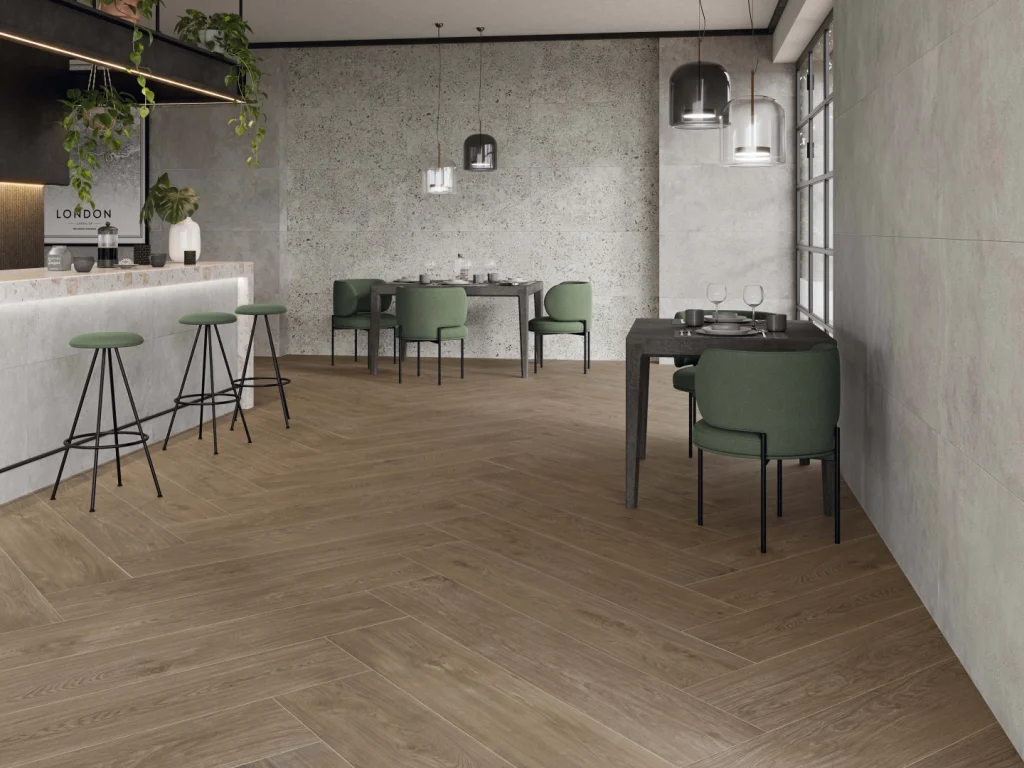
Beautiful, Robust, Easy to Clean.
Comparing Wood Look Tiles to Other Products
Price
Laminate is typically the most affordable wood alternative, followed by vinyl and then porcelain tiles.
Installation
Laminate and vinyl are relatively easy to install and can be DIY projects for handy homeowners. Professional installation of these materials is also more affordable. Porcelain tiles, however, require skilled professionals for proper leveling and alignment, making the installation process more complex and costly.
Removal
Removing laminate is straightforward and often doesn’t require professional help. Tile removal is more labor-intensive, often necessitating professional services and equipment rental.
Dents & Scratches
Porcelain tiles are resistant to dents and scratches, while laminate and vinyl are more susceptible to damage.
Cleaning
Porcelain tiles have low water absorption and are easy to clean with water. Laminate and vinyl require special cleaning products and can scratch easily.
Waterproof – Flood Proof
While many modern laminate and vinyl products claim to be waterproof, they are not suitable for areas with high humidity or potential flooding. Porcelain tiles are 100% waterproof and ideal for wet areas.
Slipperiness
Wood look porcelain tiles perform well in wet areas, unlike laminate and vinyl, which can be slippery.
Longevity
Porcelain tiles are known for their durability and long lifespan, especially under heavy foot traffic. Laminate and vinyl, on the other hand, have shorter lifespans.
Color
Wood look tiles offer a wide variety of colors and designs, whereas vinyl and laminate have more limited options.
Health
Water can seep through the joints of laminate and vinyl, leading to mold and mildew. These materials also contain plastic. Wood look porcelain tiles, in contrast, are over 95% recyclable, and well-grouted floors prevent water leakage.
Conclusion
While porcelain tiles may have a longer, dustier, and more expensive installation process, they excel in longevity, durability, maintenance, and health benefits. With endless color and design options, wood look porcelain tiles are a stylish and superior choice. Popular colors and designs may change, but the timeless appeal of wood look porcelain tiles will remain.
Shop Wood Look Tiles
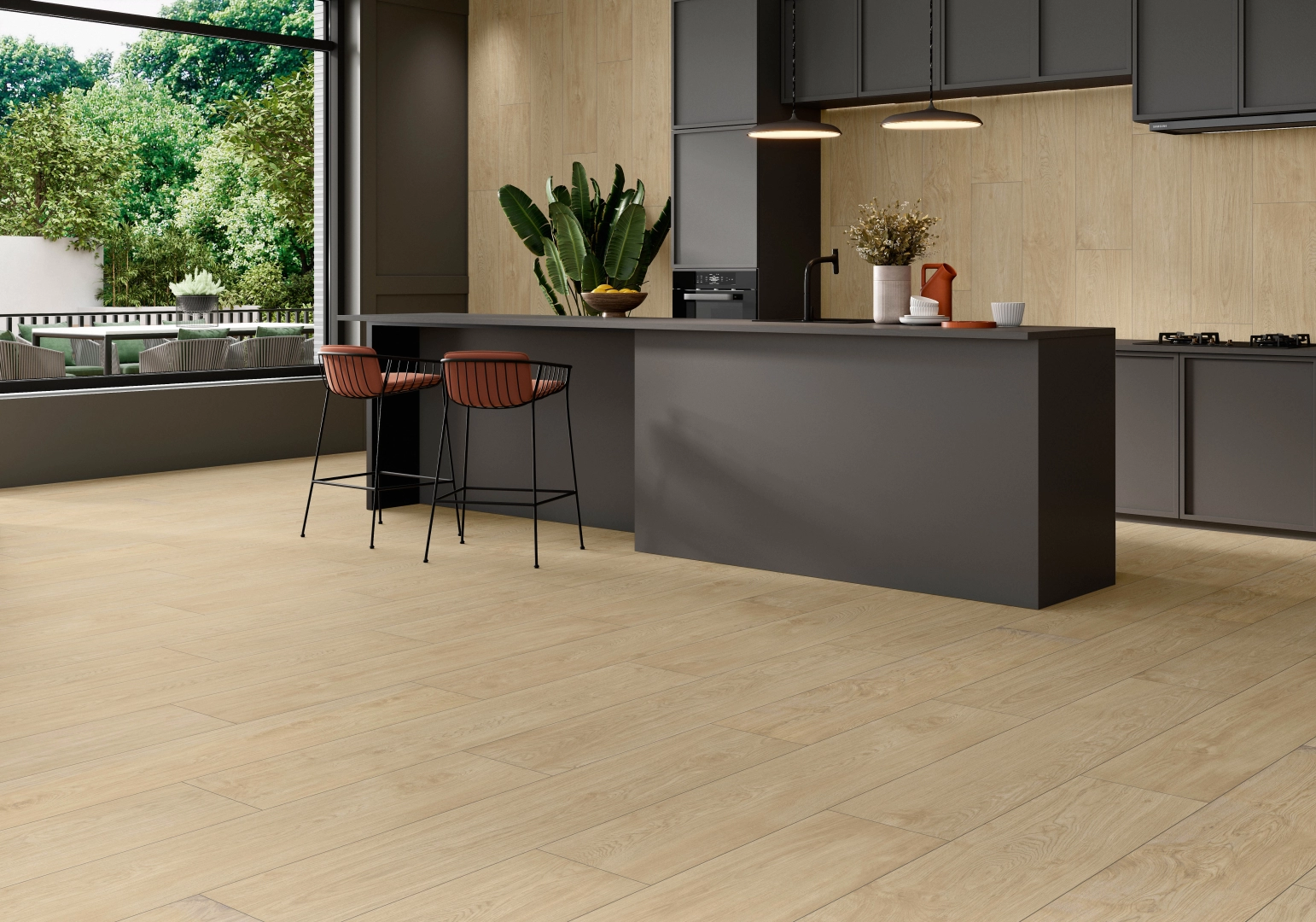
Transform your space with the timeless appeal of wood look porcelain tiles. Their versatile formats, ranging from 8×48 to 12×60, capture the natural beauty of wood while offering the superior performance of porcelain. These large format planks create a seamless flow, making any room feel more expansive and inviting.