Polished Porcelain Tiles


Get Exclusive Member Prices by Joining Our Wholesale Club
Polished Porcelain Tiles: A Finish That Brings Out the Design
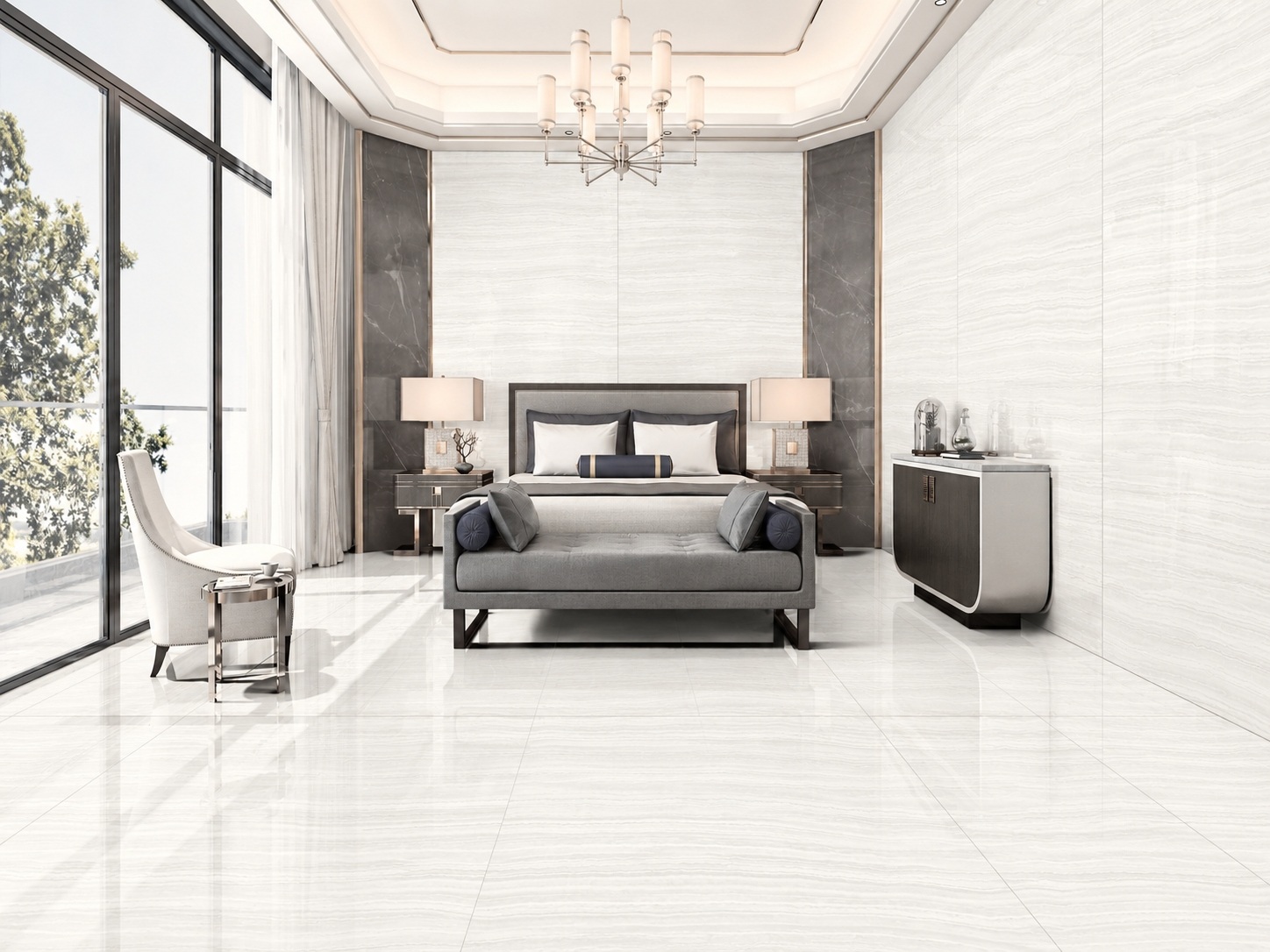
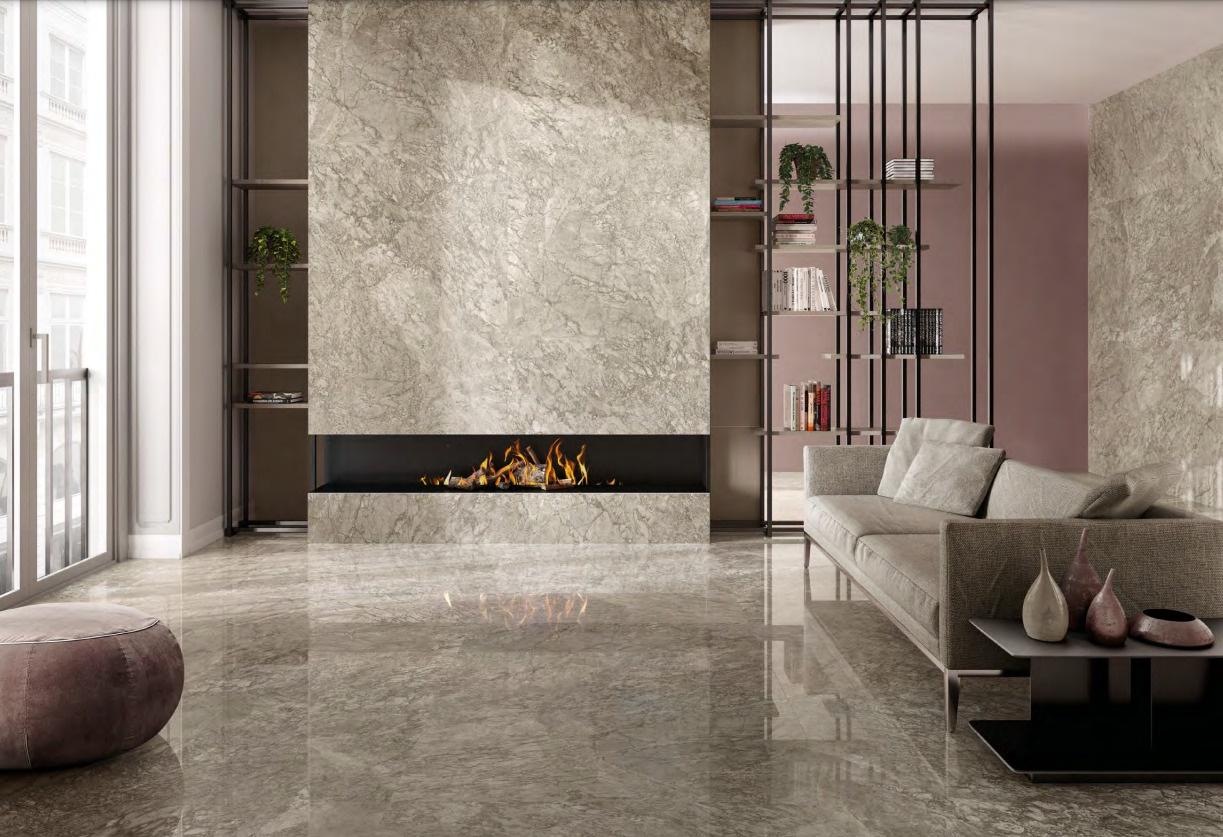
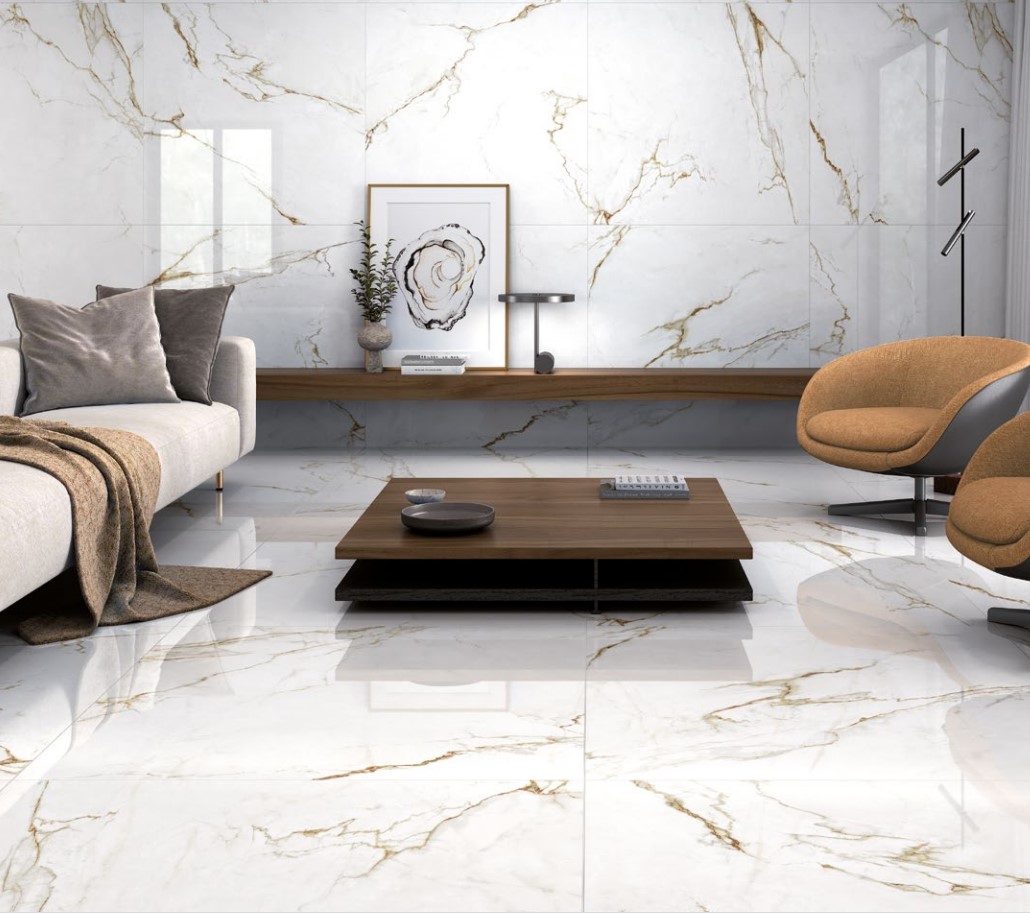
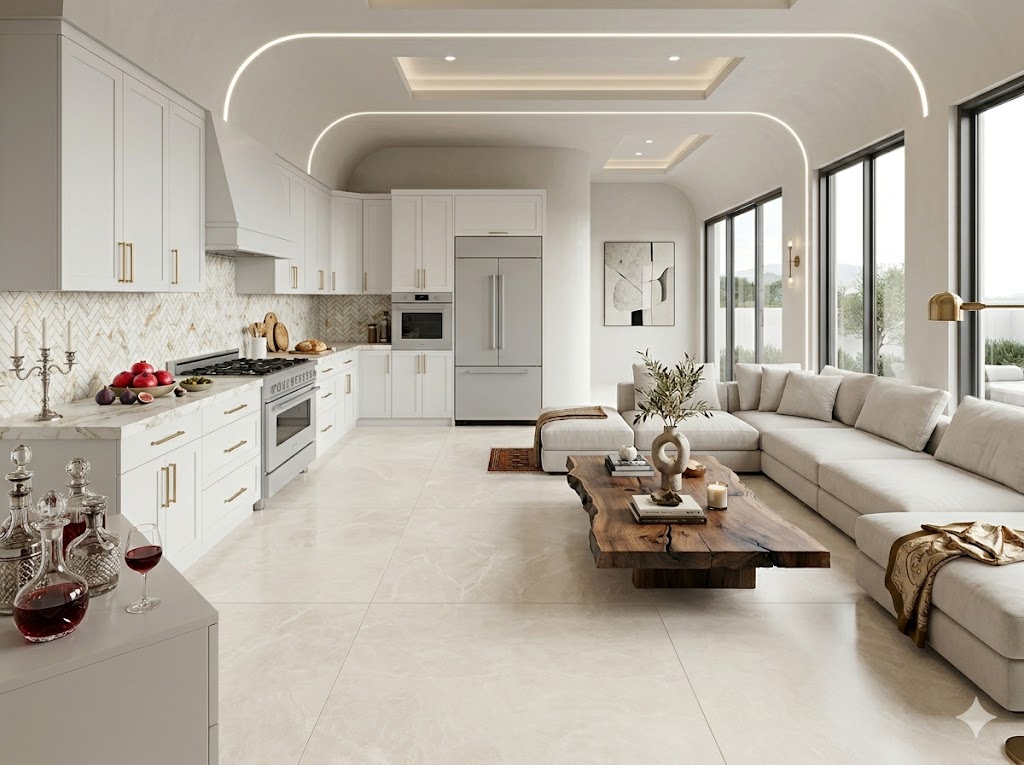
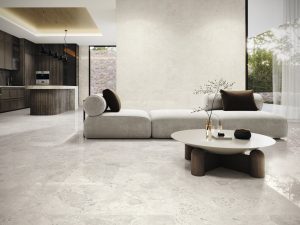
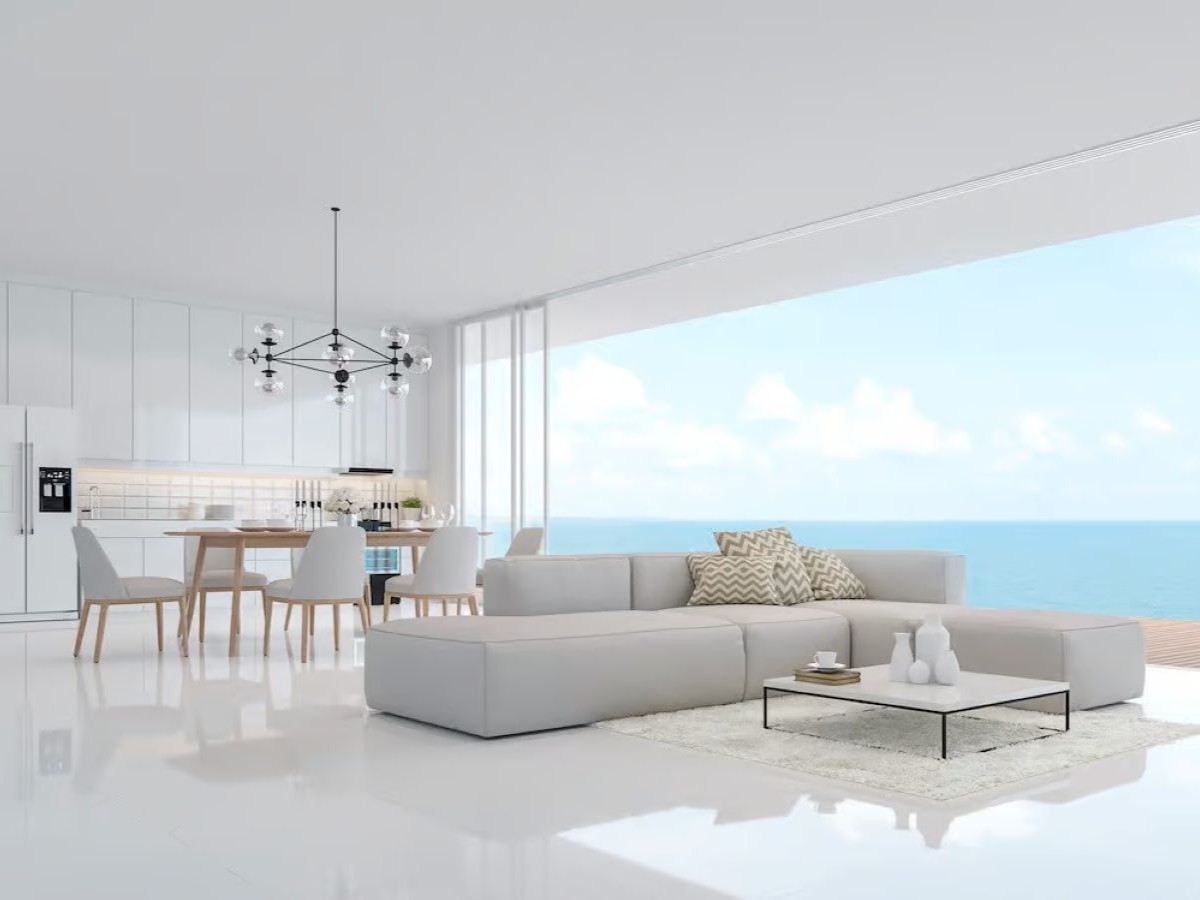
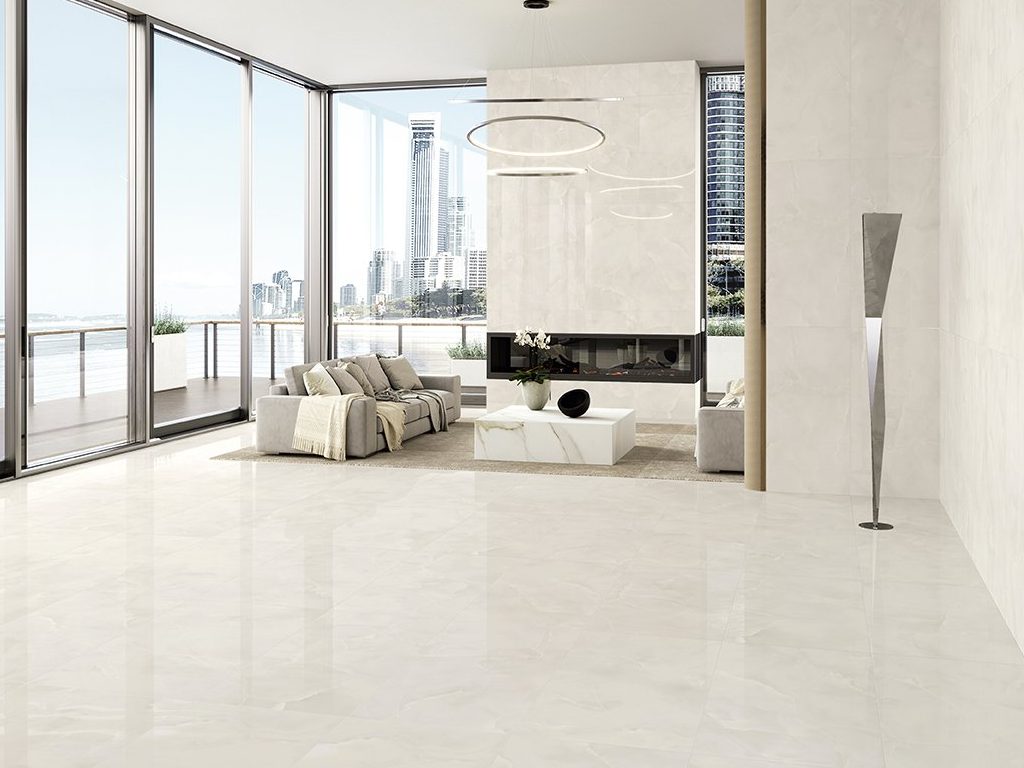
Polishing changes more than the surface sheen of a porcelain tile. It can make colors appear richer, bring greater definition to veining and other design details, and reflect light throughout the space, giving the finished surface a very different character from the same design in matte.
A polished porcelain tile gets its finish through a mechanical polishing process applied to the glazed surface. As the polishing pads work over the glaze, they create the smooth reflective finish, but they also leave microscopic pores in the surface. Because of this, manufacturers historically used a shiny glaze as the final surface layer on some porcelain tiles instead of mechanically polishing them; these are the tiles commonly referred to as shiny tiles.
Today, mechanically polished porcelain tiles are typically treated with a nano-seal that fills those microscopic pores. If you come across terms such as Nano Technology in polished-tile marketing, this is generally what they are referring to.
Not necessarily. A polished finish is created by mechanically polishing the same glazed surface used for a regular matte tile, so polishing alone does not automatically mean the tile will be unsuitable for flooring. However, Grip and In & Out finishes are not available in polished versions, so polished tiles are generally not the choice for areas where a higher level of slip resistance is required.
This is where the choice becomes a little more nuanced. Regular matte tiles may be marketed as suitable for wet areas, but both matte and polished surfaces can become slippery when wet. The difference is often how the surface feels underfoot and how cautiously people naturally move across it. In practice, we have observed that people tend to be a little more careful when walking on polished surfaces than on matte surfaces.
For kitchens and bathrooms, the important thing is not to assume that either finish is automatically slip-safe. The specific tile, surface texture, and expected exposure to water should all be considered.
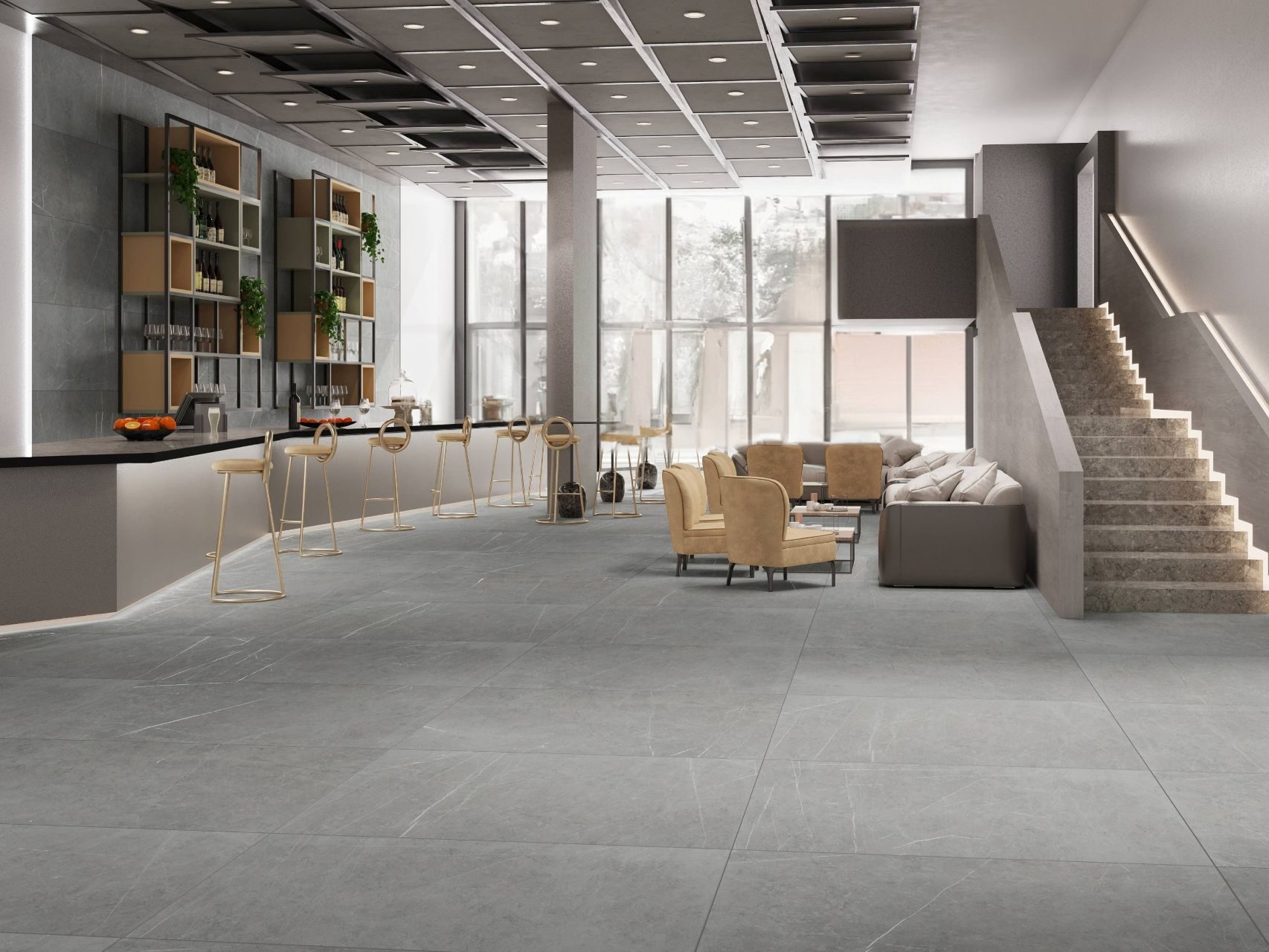
We do not recommend or market polished porcelain tiles for commercial spaces. If the polished surface is scratched deeply enough to damage the nano-seal, those microscopic pores can become exposed and the surface may become difficult or impossible to clean properly.
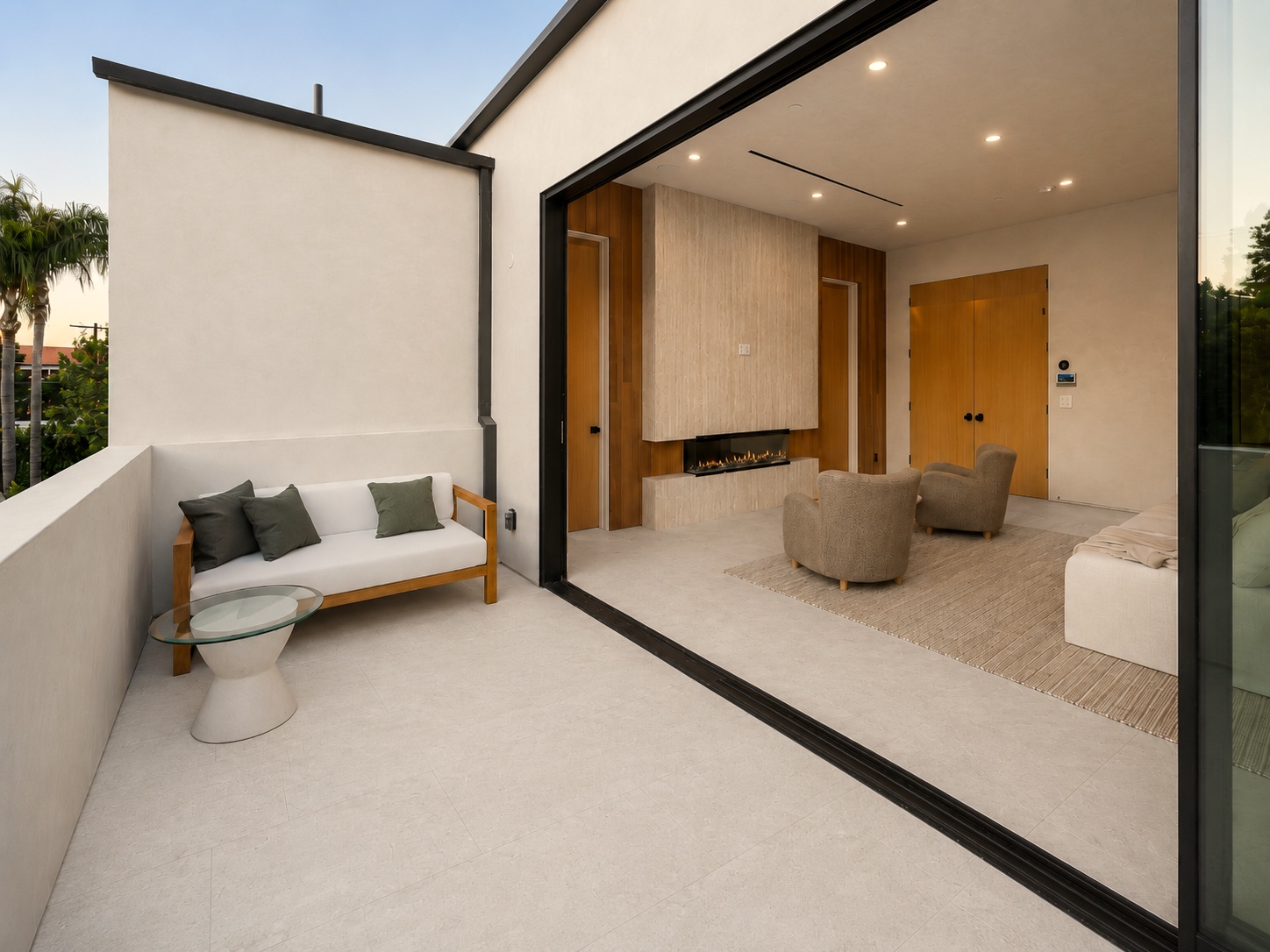
Polished tiles are better suited to residential applications. Even in a home, care should be taken when moving furniture with sharp or metal legs across the floor to avoid scratching the polished surface.
Product Filters
Shop Polished Finish Tiles
-
 Soft White Color Sone Look Tile with Polished FinishIn stockREGULAR$108.35–$116.10 / boxMEMBER$85.10–$92.85 / box
 -
 24x 48 Onyx Look with Polished FinishIn stockREGULAR$123.85 / boxMEMBER$77.35 / box
 -
24×48 Calacatta Gold Marble Look TileIn stockREGULAR$127.84 / boxMEMBER$79.84 / box
-
 24×48 Marble Look Tile With Artistic InspirationsIn stockREGULAR$123.85 / boxMEMBER$77.35 / box
 -
 48×48 Luxury Porcelain TileIn stockREGULAR$154.85 / boxMEMBER$113.00 / box
 -
 Calacatta Gold Look TileIn stockREGULAR$81.99–$100.60 / boxMEMBER$74.25–$97.50 / box
 -
 Modern Marble Look TileIn stockREGULAR$83.86–$100.64 / boxMEMBER$67.06–$79.84 / box
 -
 Light Beige Marble Look Tile with Minimal DesignIn stockREGULAR$105.44–$111.84 / boxMEMBER$79.84–$87.84 / box
 -
 Statuario Marble Look TileIn stockREGULAR$123.85–$154.85 / boxMEMBER$108.35–$134.70 / box
 -
 Warm White Marble Look Tile with Minimal DesignIn stockREGULAR$307.72 / boxMEMBER$237.72 / box
 -
 White Onyx Look TileIn stockREGULAR$335.72 / boxMEMBER$279.72 / box
 -
 White Stone Look Tile With GreyIn stockREGULAR$97.50–$139.35 / boxMEMBER$82.00–$123.85 / box
 -
White Onyx Look TileIn stockREGULAR$85.10–$108.35 / boxMEMBER$77.35–$100.60 / box
-
 Onyx Look Tile In Warm TonesIn stockREGULAR$85.10–$108.35 / boxMEMBER$77.35–$100.60 / box
 -
 LOW STOCK – TO BE DISCONTINUEDIn stockREGULAR$82.00–$108.35 / boxMEMBER$66.50–$97.50 / box
 -
 Off White Onyx Look TileIn stockREGULAR$87.84–$103.84 / boxMEMBER$71.84–$87.84 / box