

Professional Standards for Large Format Tile Installation
Complete Guide For Long-lasting Tile Installation.
Key Principles for Porcelain and Large Format Tile Success
This guide provides practical installation principles used by professionals when working with porcelain and large format tiles. It covers key topics such as substrate preparation, adhesive selection, grout joints, movement joints, and installation techniques for floors, walls, and facades.
The recommendations presented here are based on technical installation standards and industry best practices, helping installers achieve durable and visually precise results.
Essential Tools and Protective Equipment
The use of safety boots with a reinforced toe cap, cut-resistant gloves, impact-resistant safety goggles and an approved particulate respirator mask (FFP2 or equivalent) is not optional, but an essential preventive measure to guarantee the safety of the worker and to ensure the work is done right from start to finish.
Proper preparation starts with safety: being properly equipped is the first step to ensuring a professional, precise installation in compliance with the required quality standards.
Planning
INSTALLATION SURFACES (Substrates).
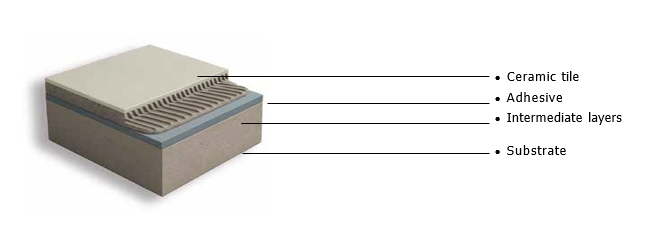
The installation surface is the outer surface of a set of layers on which the adhesive is to be applied and the tile will then be placed. Under this installation surface is the substrate and any intermediate layers that may be included to increase insulation, waterproofing, protection, etc. There are a large number of substrates (concrete, plaster, mortar, prefabricated blocks, wood, etc.) that each require specific treatment. We will just comment on a few general aspects.
The intended use of the installed wall or floor covering must also be considered, as this will determine some of the requirements.
Next, examine the state of the surface to be tiled; it’s very important to take into account any unevenness. In addition, this is the moment to decide on the type of joint, both grout joints and movement joints.
Any residue on the installation surface prevents the adhesive from bonding properly, so the surface must always be fully cleaned and left to dry completely. Failure to do so can lead to weak points of adhesion where tiles may lift up over time.
Another problem is an irregular surface. When using the thick-bed installation method, these defects can be corrected by screeding with a layer of mortar.
But when using the thin-bed method, it is essential to have perfectly flat surfaces, because the tiled surfaces will replicate the installation surface.
Substrate Requirements and Surface Flatness
The flatness deviation of an installation surface should be measured with a 2 m. (6′) long straightedge. To be able to install directly on the surface, the deviation must be less than 3 mm.(1/8″)
For larger deviations, a levelling layer must be added before installation.
Selecting the Right Adhesive: Standards and Classifications
Standard EN 12004 defines the different types of adhesives and grouting material based on their chemical composition:
Quick Reference Guide:
- C1 vs. C2: “C” stands for cement-based. C2 is an “improved” adhesive with double the bonding strength of C1—essential for large format tiles.
- S1 vs. S2: These indicate flexibility (deformability). Large tiles expand and contract; an S1 or S2 rating means the adhesive can flex without cracking the tile.
- T (Thixotropic): This means “non-slip.” It is critical for wall installations to prevent heavy 24×48 tiles from sliding down before the adhesive sets.
Subdivisions
| 1 | Normal adhesive |
| 2 | Improved adhesive |
| F | Fast-setting adhesive (for type C only) |
| T | Extended open time adhesive (for types C and D only) |
| E | Deformable adhesive (for type C only) |
| S1 | Deformable adhesive (for type C only) |
| S2 | Highly deformable adhesive (for type C only) |
The recommended adhesive for internal flooring in residential and public-use environments is as follows:
ADHESIVE TYPE: PORCELAIN FOR INDOOR FLOORING
| LENGTH OF LONGEST SIDE OF THE TILE | ≤ 30 (12″) | ≤ 60 (24″) | ≤ 90 (36″) | ≤ 120 (48″) | > 120 (48″) |
| General Requirement | C1 | C2 | C2 | C2 | C2S1 |
| Cement screed, with underfloor heating | C2 | C2S1 | C2S1 | C2S2 | C2S2 |
| Calcium sulphate screed (anhydrite), no underfloor heating (primer required) | C1 | C2 | C2 | C2 | C2S1 |
| Calcium sulphate screed(anhydrite), with underfloor heating (primer required) | C2 | C2S1 | C2S1 | C2S2 | C2S2 |
| Concrete – floor slab, on-grade, or structural slab | C2 | C2 | C2S1 | C2S1 | C2S2 |
| Existing mosaic, terrazzo or stone tiles | C2 | C2 | C2 | C2S1 | C2S1 |
| Metal surfaces | R1 | R1 | R2 | R2 | R2 |
ADHESIVE TYPE: PORCELAIN FOR OUTDOOR FLOORING
The recommended adhesive according to the type of substrate is as follows:
| LENGTH OF LONGEST SIDE OF THE TILE | ≤ 30 (12″) | ≤ 60 (24″) | ≤ 90 (36″) | ≤ 120 (48″) | > 120 (48″) |
| Cement screed | C2 | C2S1 | C2S2 | C2S2 | C2S2 |
| Directly on concrete floor slab, on-grade, or structural slab | C2 | C2S1 | C2S2 | C2S2 | C2S2 |
| Existing mosaic, terrazzo or stone tiles | C2S1 | C2S1 | C2S2 | C2S2 | C2S2 |
| Metal surfaces | R1 | R1 | R2 | R2 | R2 |
ADHESIVE TYPE: PORCELAIN FOR INDOOR WALLS
The recommended adhesive for porcelain tiles on indoor walls and ceilings is as follows:
| LENGTH OF LONGEST SIDE OF THE TILE | ≤ 30 (12″) | ≤ 60 (24″) | ≤ 90 (36″) | ≤ 120 (48″) | >120 (48″) |
| Lime or cement plaster | C1/D1 | C2 | C2 | C2 | C2S1 |
| Gypsum plaster (primer required) | C1/D1 | C2 | C2 | C2 | C2S1 |
| Gypsum plasterboard | C1/D1 | C2 | C2S2 | C2S1 | C2S2 |
| Directly on concrete | C2/D1 | C2 | C2S1 | C2S1 | C2S2 |
| Existing mosaic, terrazzo or stone tiles | C2 | C2 | C2S1 | C2S1 | C2S2 |
| Cement boards or fibre cement boards | C1/D1 | C2 | C2 | C2S1 | C2S2 |
| Large size ceramic bricks | C1/D1 | C2 | C2 | C2 | C2S1 |
| Wooden surfaces | C2/D1/R1 | C2S1/R1 | C2S2/R1 | R2 | R2 |
| Metal surfaces | R1 | R1 | R2 | R2 | R2 |
For walls with radiant heating, the choice of adhesives is as follows:
| LENGTH OF LONGEST SIDE OF THE TILE | ≤ 30 (12″) | ≤ 60 (24″) | ≤ 90 (36″) | ≤ 120 (48″) | > 120 (48″) |
| Lime or cement plaster with radiant heating | C2/D1 | C2S1 | C2S1 | C2S2 | C2S2 |
| Gypsum-based plaster with radiant heating (primer required) | C2/D1 | C2S1 | C2S1 | C2S2 | C2S2 |
ADHESIVE TYPE: WHITE BODY TILES FOR INDOOR WALLS
The recommended adhesive for white body tiles on indoor walls and ceilings is as follows:
| LENGTH OF LONGEST SIDE OF THE TILE | ≤ 30 (12″) | ≤ 60 (24″) | ≤ 90 (36″) | ≤ 120 (48″) | >120 (48″) |
| Lime or cement plaster | C1/D1 | C1/C2 | C2 | C2 | C2S1 |
| Gypsum plaster (primer required) | C1/D1 | C1/C2 | C2 | C2 | C2S1 |
| Gypsum plasterboard | C1/D1 | C2 | C2S1 | C2S1 | C2S2 |
| Directly on concrete | C1/C2/D1 | C2 | C2S1 | C2S1 | C2S2 |
| Existing mosaic, terrazzo or stone tiles | C2 | C2 | C2S1 | C2S1 | C2S2 |
| Cement boards or fibre cement boards | C1/D1 | C2 | C2 | C2S1 | C2S2 |
| Large size ceramic bricks | C1/D1 | C1/C2 | C2 | C2 | C2S1 |
| Wooden surfaces | C2/D1/R1 | C2S1/R1 | C2S2/R1 | R2 | R2 |
| Metal surfaces | R1 | R1 | R2 | R2 | R2 |
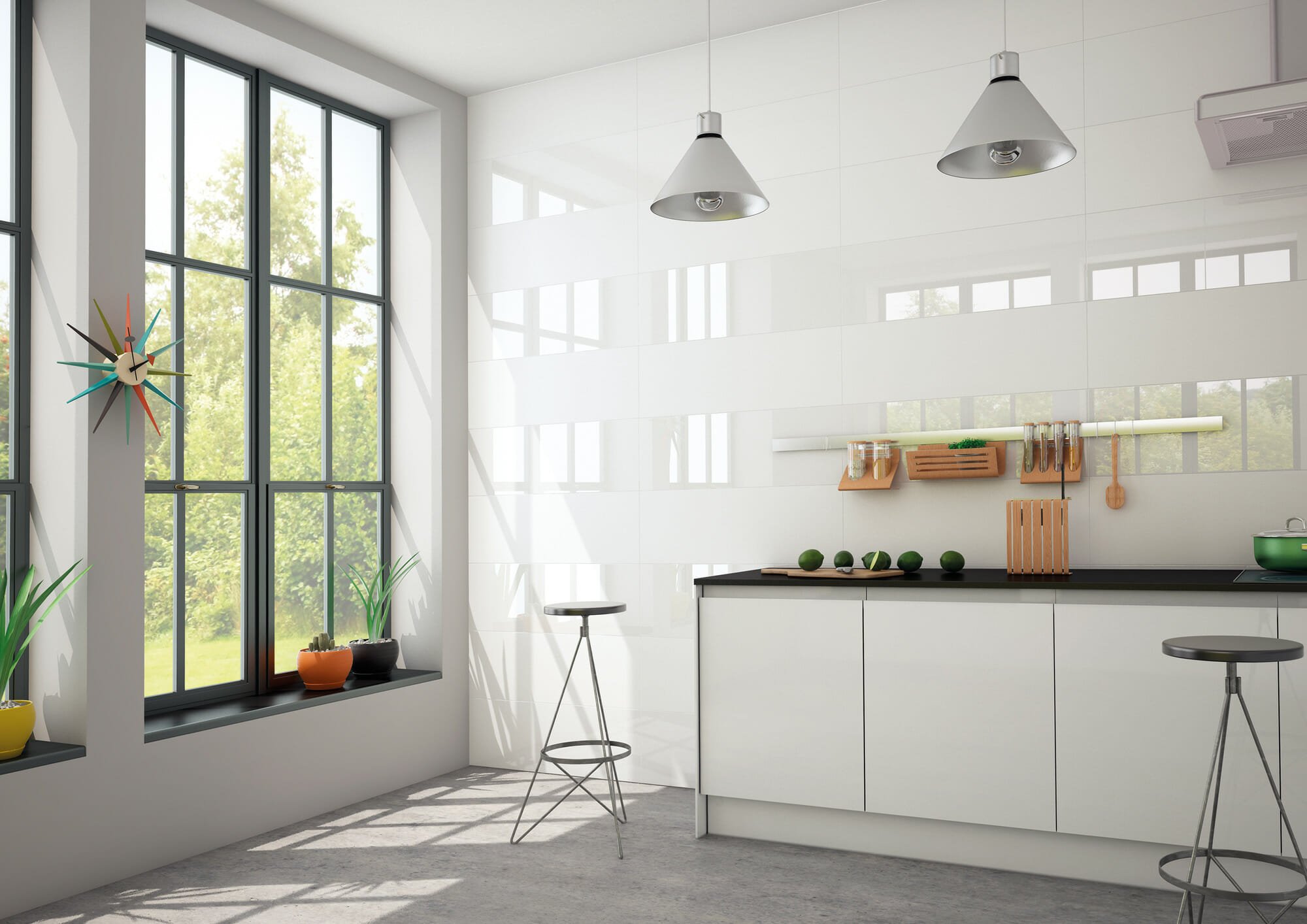
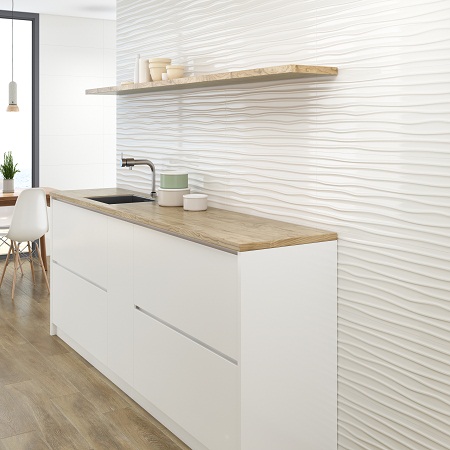
When the tile is white or light-colored, it is advisable to use a white tile adhesive
For walls with radiant heating, the choice of adhesives is as follows:
| LENGTH OF LONGEST SIDE OF THE TILE | ≤ 30 | ≤ 60 | ≤ 90 | ≤ 120 | > 120 |
| Lime or cement plaster with radiant heating | C2/D1 | C2S1 | C2S1 | C2S2 | C2S2 |
| Gypsum plaster with radiant heating (primer required) | C2/D1 | C2S1 | C2S1 | C2S2 | C2S2 |
Grout Joint Standards and Achieving Minimal Seams
They absorb any deformation in the substrate, preventing the stresses and expansions of the construction materials from being transmitted to the tiles.
They absorb dimensional variations of the tiles caused by humidity or temperature changes.
They allow the evaporation of water from adhesives, which is necessary for adhesives to harden.
They correct dimensional variations in the tiles.
They facilitate the replacement of individual tiles if repairs are needed.
Aesthetic effect (modularity depending on the width, color and texture).
Ceramic tiles must never be installed without joints (i.e. butt-jointed installation), or with a gap of less than 1/16″.
For a detailed breakdown of the risks involved with grout-less tiling, read our full article: “The Truth About Seamless Tile Designs.”
| Indoor floors on stable substrates | ≤ 90 (36″) | 1/16″ ≤ E < 1/8″ (minimum joint) |
| > 90 (36″) | 1/8″ ≤ E < 13/64″ (narrow joint) | |
| Indoor floors on less stable substrates or with underfloor heating | ≤ 30 (12″) | 1/16″ ≤ E < 1/8″ (/ minimum joint) |
| > 30 (12″) | 1/8″ ≤ E < 13/64″(narrow joint) | |
| Indoor floors for commercial or industrial use | ≤ 30 (12″) | 1/16″ ≤ E <1/8″ (minimum joint) |
| > 30 (12″) | 1/8″ ≤ E < 13/64″ (narrow joint) | |
| Indoor walls on stable substrates | ≤ 90 (36″) | 1/16″ ≤ E <1/8″ (minimum joint) |
| > 90 (36″) | 1/8″ ≤ E < 13/64″ (narrow joint) | |
| Indoor walls on less stable substrates or with radiant heating | ≤ 30 (12″) | 1/16″ ≤ E < 1/8″ (minimum joint) |
| > 30 (12″) | 1/8″ ≤ E < 13/64″ (narrow joint) | |
| Swimming pools, hot tubs, spas, water tanks, fountains | ≤ 30 (12″) | 1/16″ ≤ E <1/8″ (minimum joint) |
| > 30 (12″) | 1/8″≤ E < 13/64″ (narrow joint) | |
| Outdoor floors, roofs, terraces, balconies | Any size | 1/8″ ≤ E < 13/64″ (narrow joint) |
| Urban flooring | Any size | ≥ 13/64″ (wide joint) |
| Facades | Any size | ≥ 13/64″ (wide joint) |
“Note on Large Format: While standards allow for 1/8″, a 1/16″ joint is achievable on perfectly level, stable substrates using professional leveling systems, providing the most seamless aesthetic for 24×48 and 48×48 porcelain. tiles”
GROUTING MATERIAL
CG: Cementitious grout
RG: Reaction resin grout
Cementitious grouts are subdivided into two classes, depending on their specific characteristics:
1: Standard cementitious grout 2: Improved cementitious grout
minimal absorption of water (W)
high abrasion resistance (A)
The choice of grouting material depends on the use of the ceramic tile:
| Application Area | Class |
|---|---|
| Residential use in dry areas | CG1 |
| Residential use in wet areas | CG2W |
| Outdoor floors and walls | CG2WA |
| Places that need to be sealed against water and steam | RG |
| Places immersed in chlorinated water (swimming pools, tubs, spas…) | CG2WA/RG |
| Places immersed in water (swimming pools, spas, spas…) with stringent requirements, saline electrolysis, or seawater | RG |
| Uses with stringent mechanical and/or chemical requirements | RG |
| Places used for food and/or health services | RG |
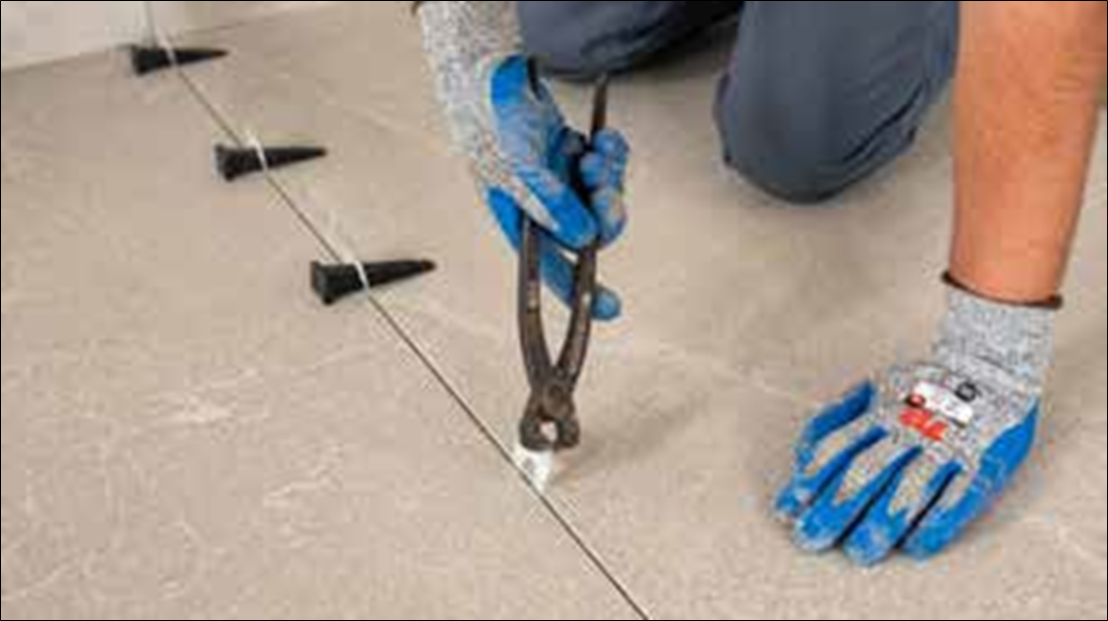
Tile spacers and levelling systems must be removed before grouting can begin. .

Grout joints must be empty and clean of any adhesive materials, debris or dirt, and they must have a uniform depth.
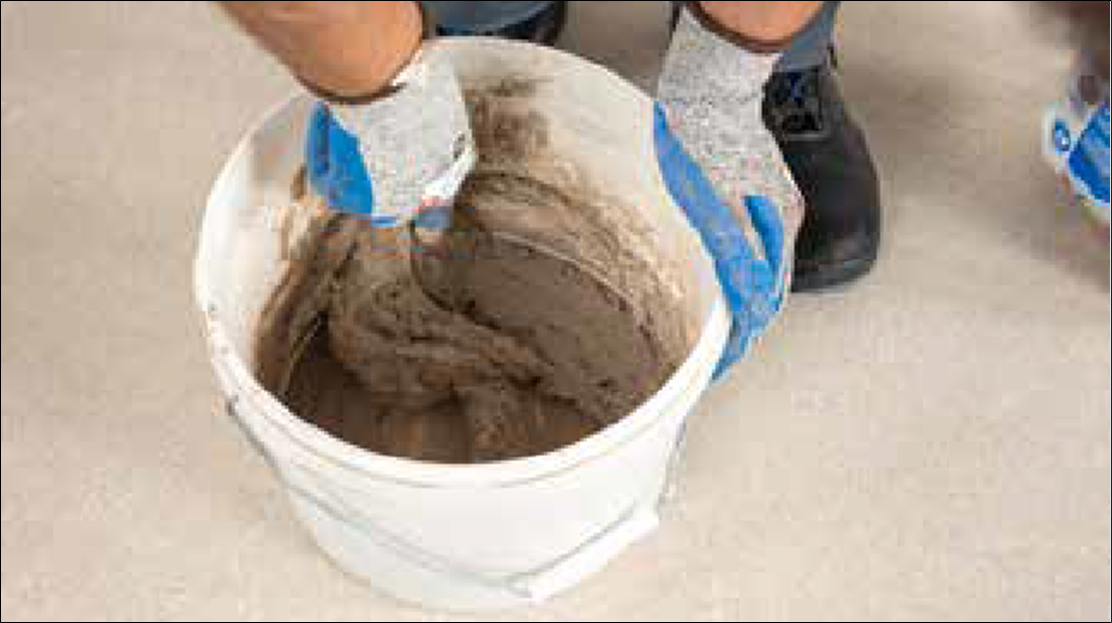
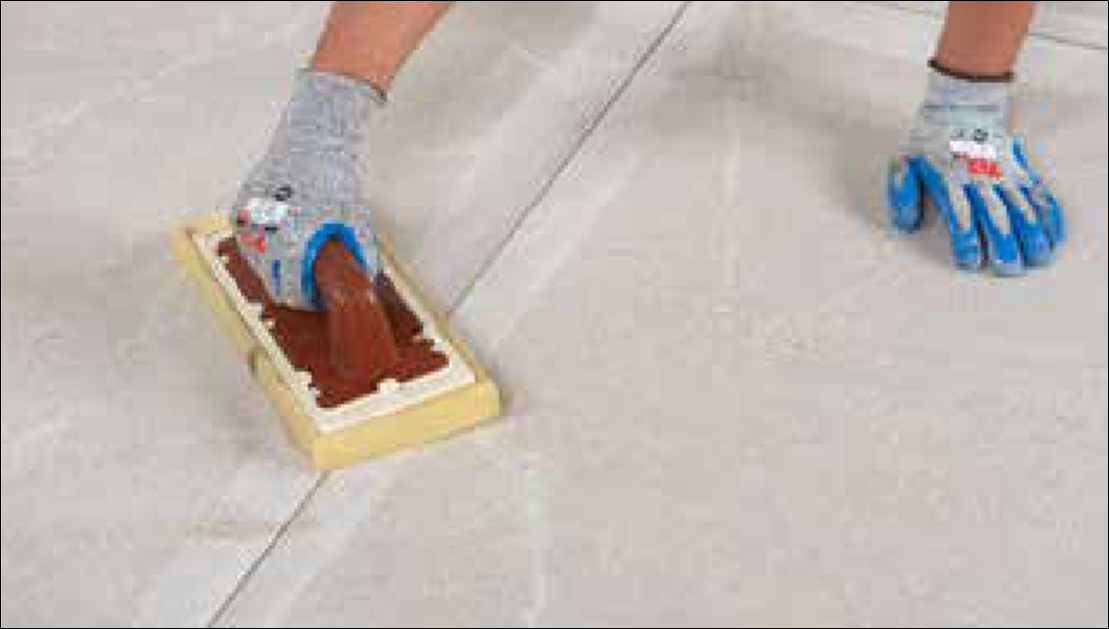
- Do not prepare large quantities of grouting material; this will ensure that it is applied as fresh as possible and as unaffected by environmental conditions (temperature, humidity and air circulation) as possible
- If the grout has to fit perfectly into the joint, it should be applied with an extrusion gun and then finished off with a steel spatula.
MOVEMENT JOINTS
In indoor floors, expansion joints must be made with a minimum width of 13/64″,, respecting open contraction joints. If there are none, make lines of joints every 8 m, creating panels with a maximum regular area of 40 m2.
In outdoor floors, lines of expansion joints with a minimum width of 8 mm must be made every 2.5 – 5 m, creating panels with a maximum regular area of 16 m2.
On facades, lines of expansion joints with a minimum width of 8 mm must be made under each structural slab, every 3 – 4 m, creating panels with a maximum regular area of 16 m2.
At one-off points such as door steps or changes in flooring, a joint of at least 8 mm is recommended.
They must be flexible, waterproof and securely bonded, extending down through the adhesive.
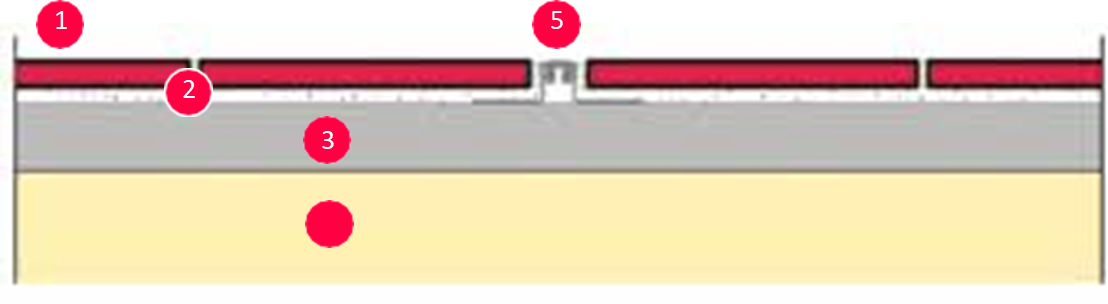
- Tile
- Adhesive material
- Levelling layer
- Substrate
- Expansion joints
PERIMETER JOINTS
Prefabricated joints or elastic sealants can be installed
A joint width of at least 8mm is recommended.
Where the system comes into contact with carpentry work or between interior walls, the joints can be a minimum of 13/64″.
It is essential that they extend down into the substrate layer or separation layer, if there is one.
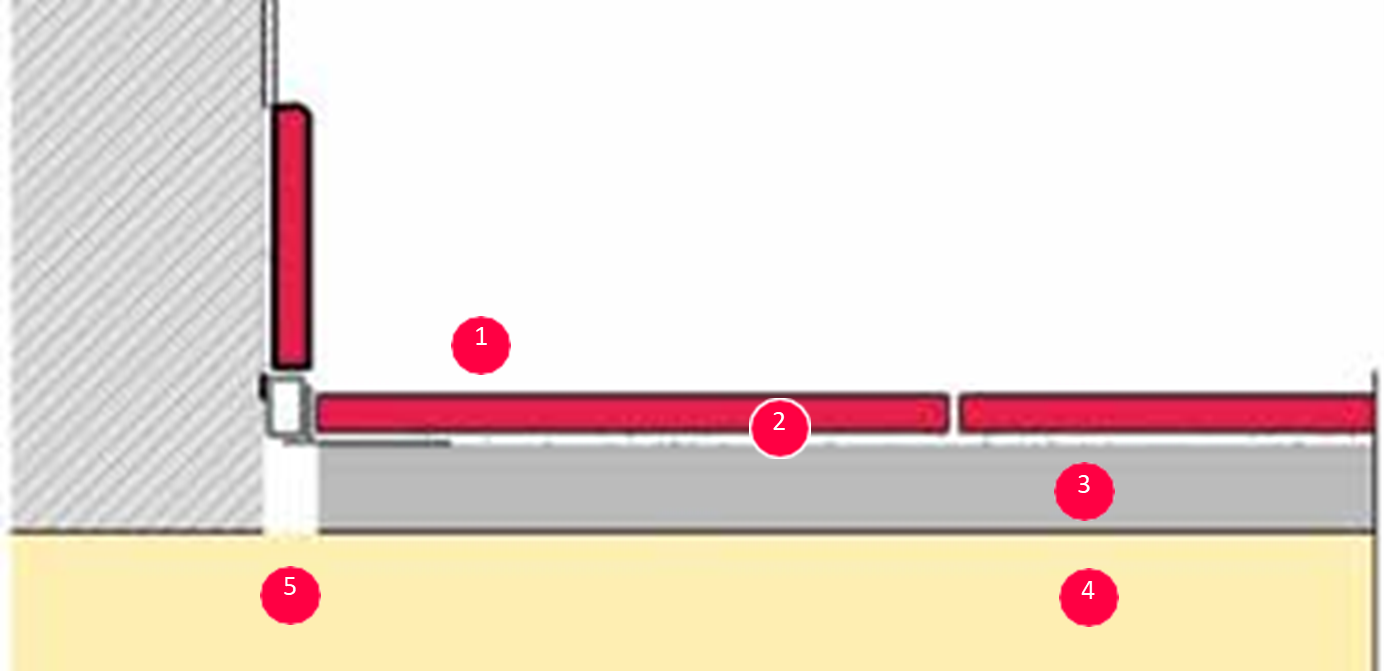
- Tile
- Adhesive material
- Levelling layer
- Substrate
- Perimeter joints
INSTALLATION
The thin-bed technique is characterized by the thin layer (1-5 mm) of adhesive used on the installation surface. It can be applied on the surface of the substrate only (single-surface application) or on the substrate and on the back of the tile (back-buttering).
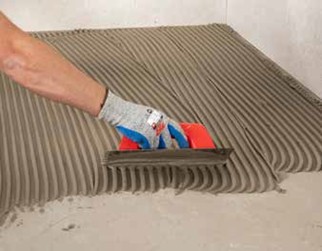
The thin-bed method entails spreading the adhesive in a thin layer on part of the installation surface, then combing with a notched trowel, always parallel to the short side of the tile.
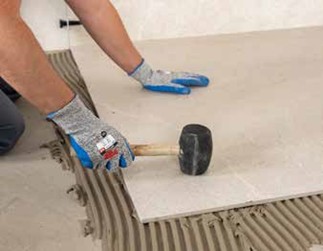
When tapping the installed tile, the straight trowelling lines help the ridges to collapse and allow air to escape through the ends, preventing the creation of voids and holes without adhesive and improving the bond by ensuring full contact across the entire surface of the tile.
The thin-bed technique offers the following advantages:
- Smaller amount of adhesive required
- It eliminates the risk of errors when preparing mixtures
- Faster, more effective installation
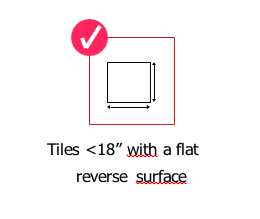
BACK-BUTTERING METHOD
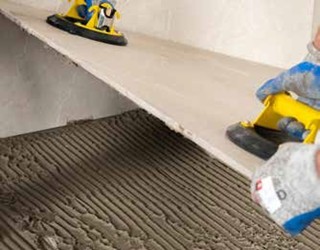
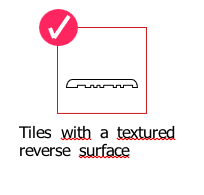
The adhesive is always applied with a notched trowel: 1/4″ – 3/8″ on the installation surface and 3 mm on the tile.




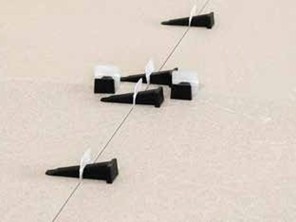
SPACERS AND LEVELLING SYSTEMS
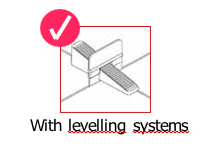
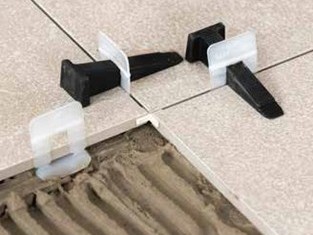
They improve the aesthetics of ceramic tiled surfaces and facilitate the application of the grouting material.
They come in different thicknesses to suit different joint sizes.
These systems help to create an attractive and functional finish, facilitating cleaning and preventing possible accidents caused by tripping over uneven tiles.
Levelled floors are more durable as they are less likely to suffer damage from movement or knocks.
CUTTING AND DRILLING
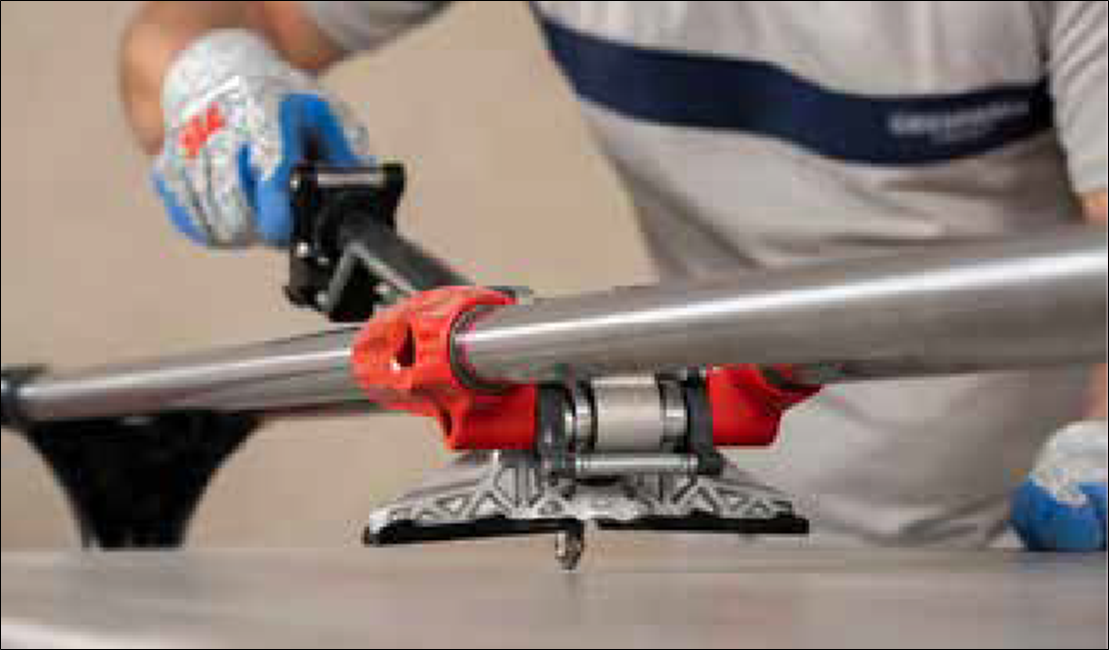
Linear cuts: standard porcelain stoneware cutting tools can be used. Cut the surface of the tile from one end to the other without stopping and applying steady, uniform pressure.
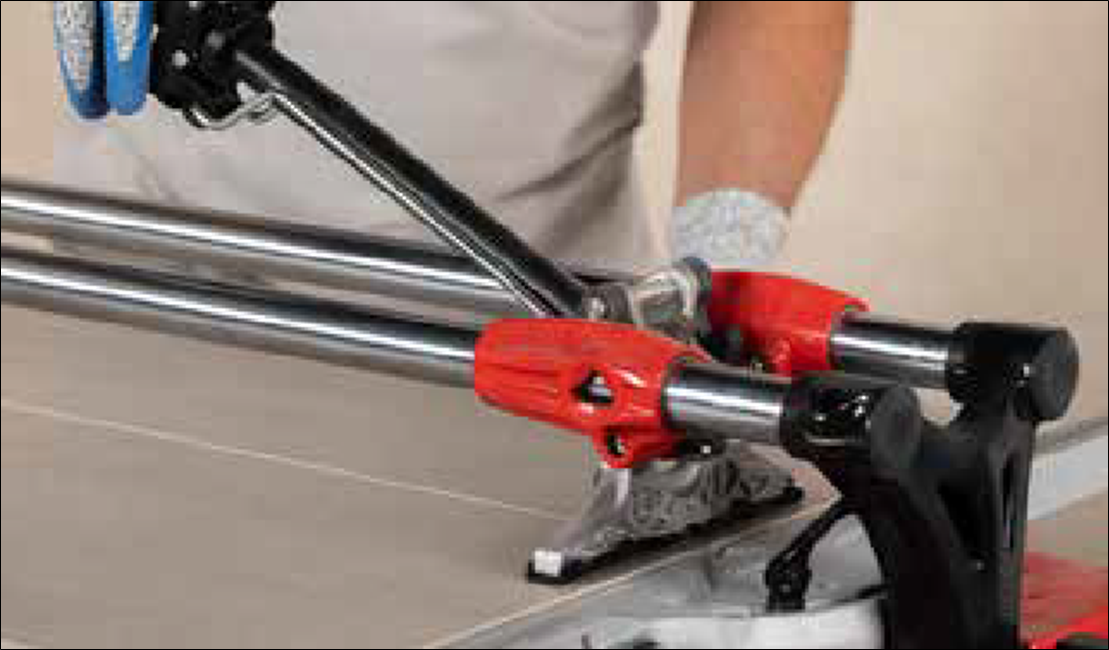
Once the incision has been made, apply gentle pressure on either side to break into two pieces
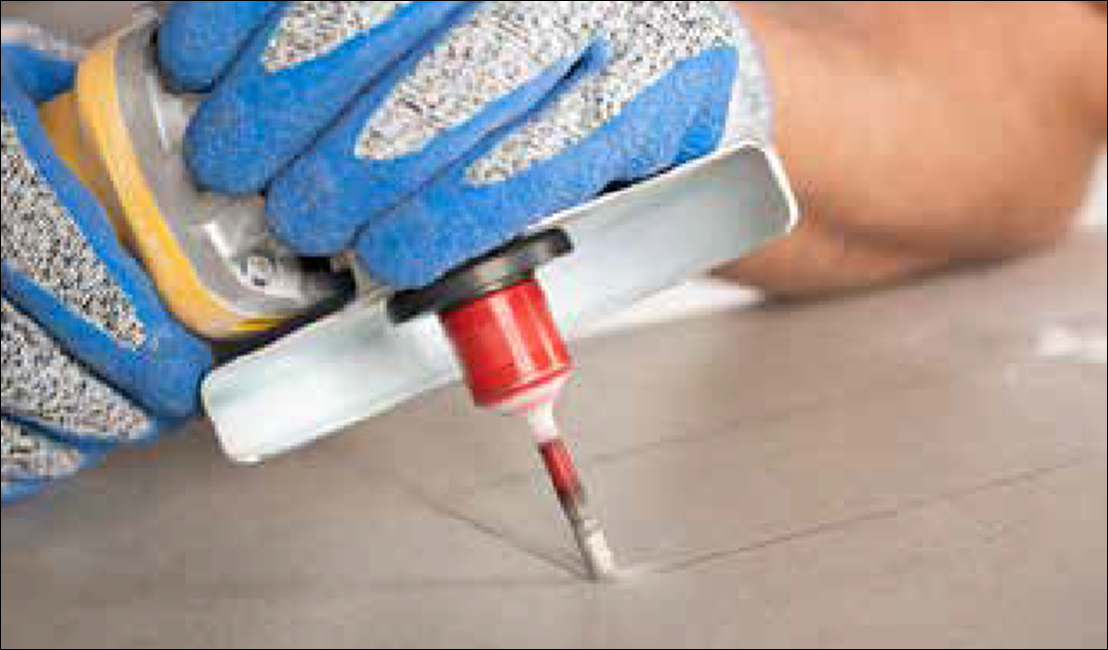
Holes: To drill holes smaller than 10 mm in diameter, use an electric drill with an appropriate bit. Do not use hammer mode, and operate at a low rotation speed. Do not exert excessive pressure on the surface of the tile.
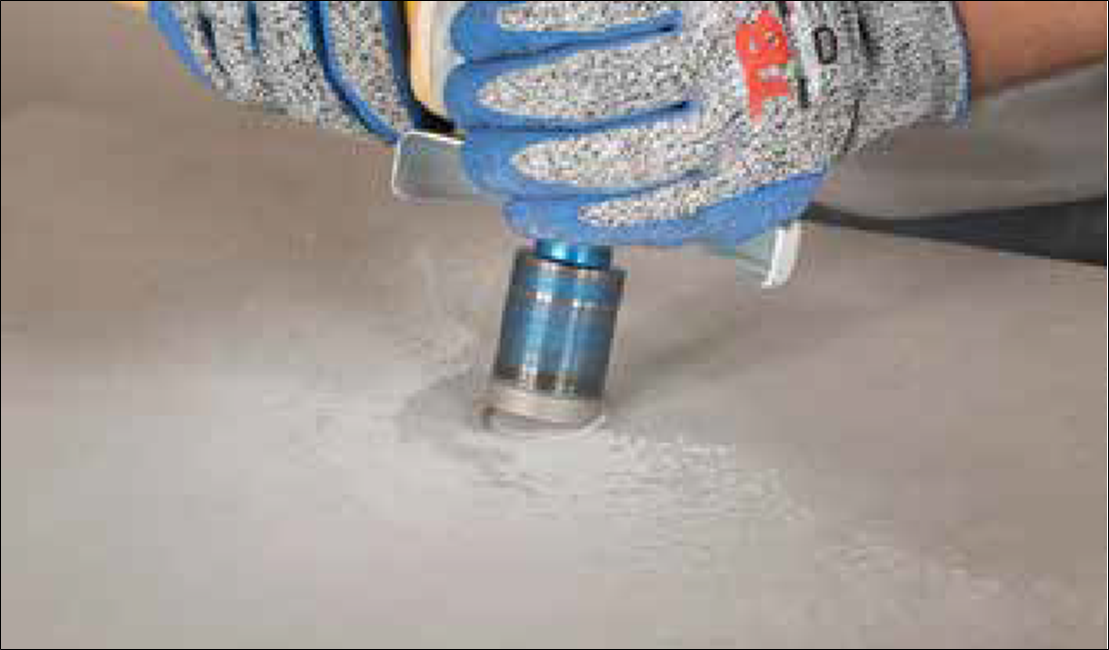
For holes larger than 10 mm in diameter, use a hole saw. Start drilling with the tool at a slight angle to the tile. These tools can be used either wet or dry.
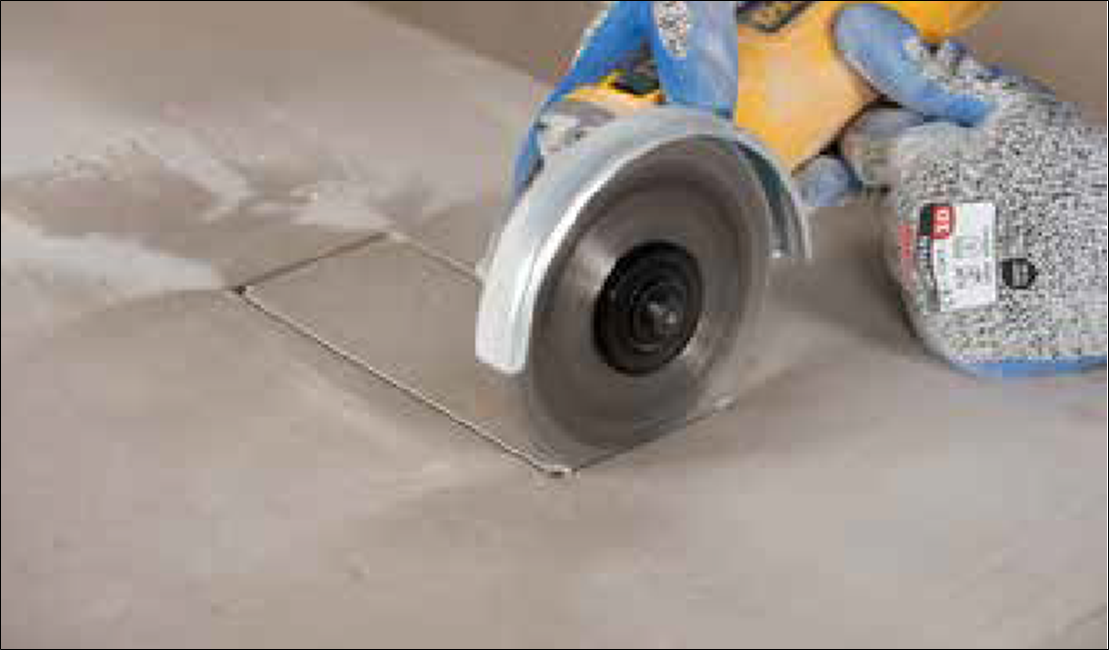
Square / Rectangle holes: to make square holes for junction boxes, sockets, etc. it is recommended to use an electric tile cutter with a continuous diamond cutting blade. Before cutting, use a drill to make holes at the corners of the shape to be cut.
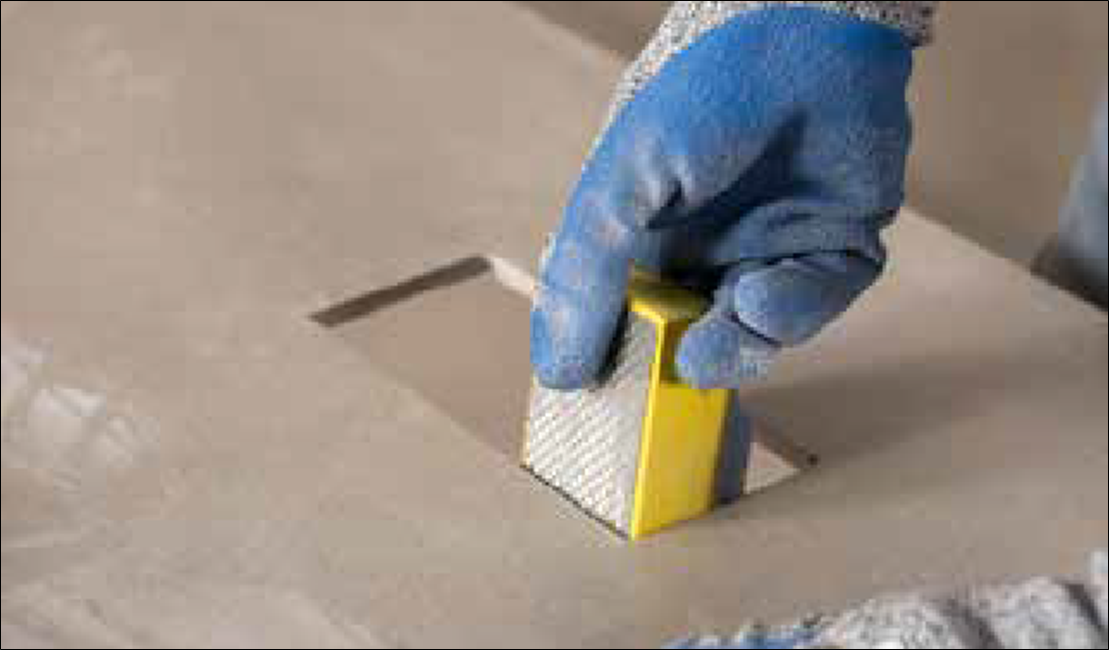
To ensure a good finish and prevent sharp edges, it is important to finish them off with an abrasive sandpaper.
“Never make the square holes through the underside of the tiles or go past the edges of the hole with the electric cutter.“
These cuts cause stress to concentrate in the inner corners, which can lead to cracks or breaks over time. With proper planning, the cuts can be distributed strategically, preserving the integrity and durability of the tiles.
Avoid “L” and “U” shaped cuts, since they can lead to cracks and breaks in the future; proper planning is crucial here.
FLOOR INSTALLATION

Check that the ambient temperature lies between 5 and 30ºC, during both the installation and the curing time of the cementitious adhesive
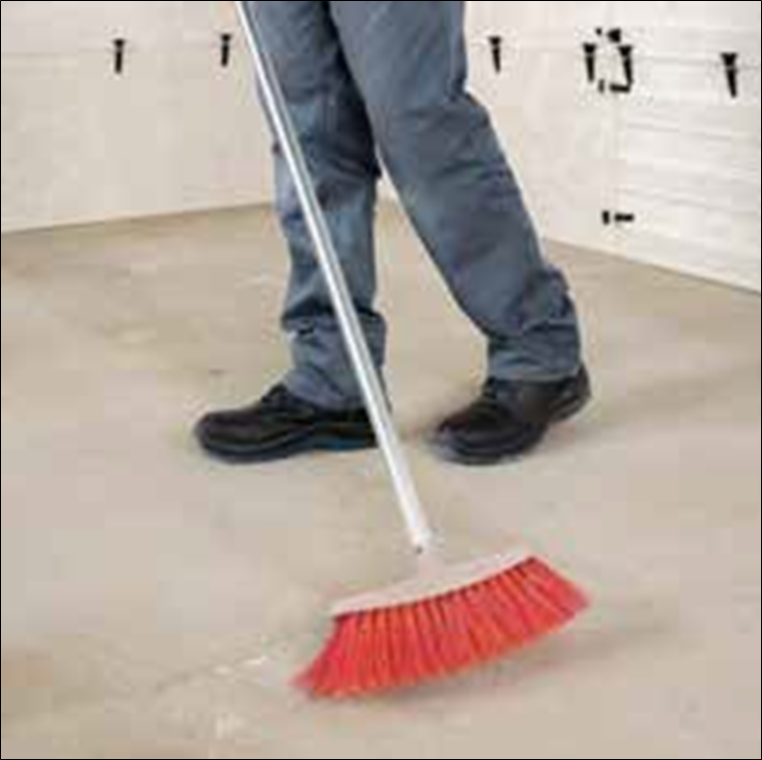
The surface must be completely dry and clean of grease, oil and dust, with no traces of cement, resin, paint, or loose particles.
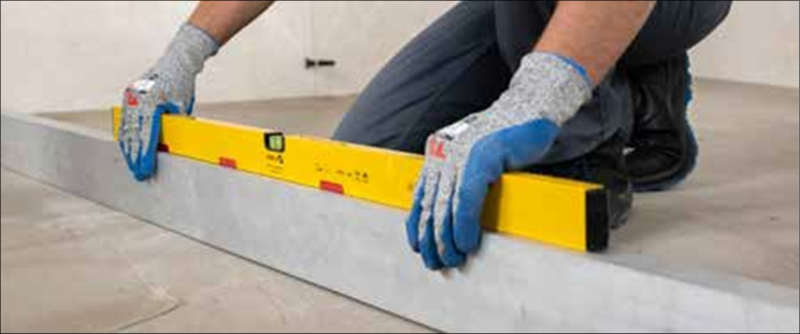
The surface should be perfectly flat. It is essential to fill in any uneven parts using suitable products to achieve a perfectly level floor.
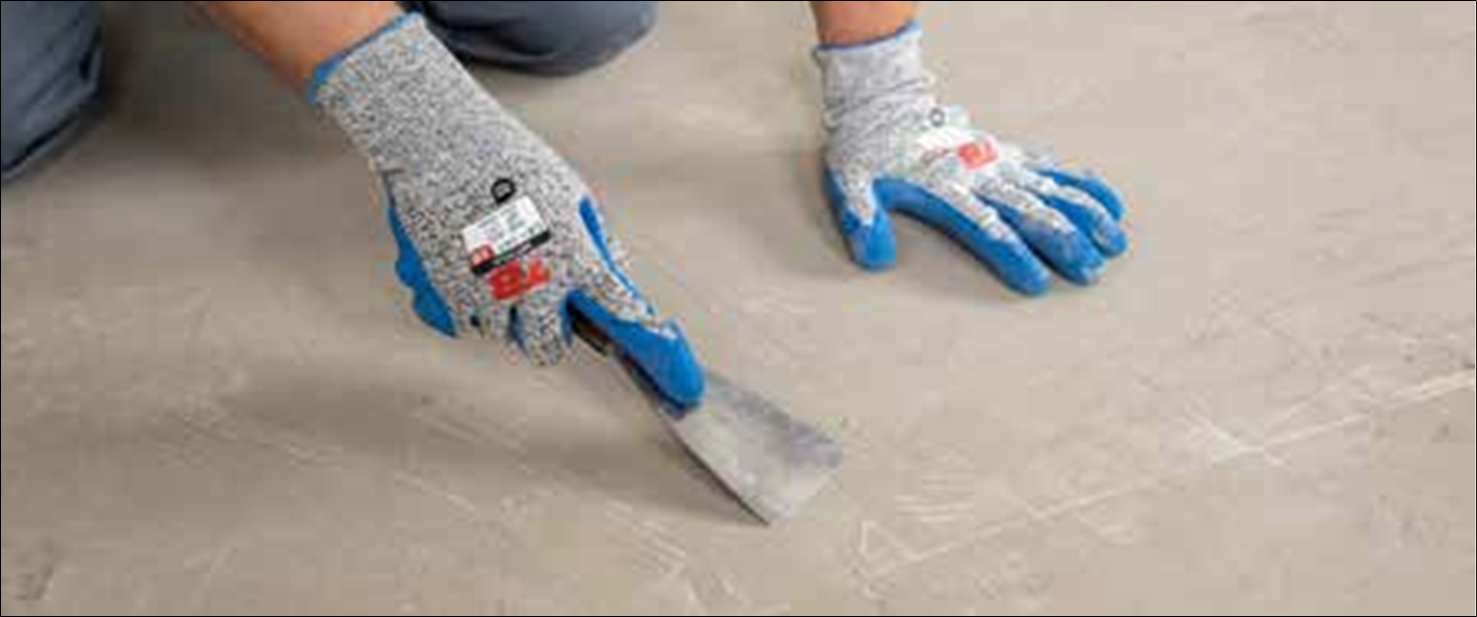
The surface must be completely dry and clean of grease, oil and dust, with no traces of cement, resin, paint, or loose particles.
- Floor should have the necessary strength and mechanical resistance for the stresses it will have to withstand in the intended use.
- Make the necessary perimeter joints and expansion joints and respect the structural joints
- When installing on top of existing floor tiles, make sure they are solid, stable and well bonded. Before installing the new flooring, the existing floor tiles should be properly cleaned.
APPLICATION OF THE ADHESIVE AND TILE INSTALLATION
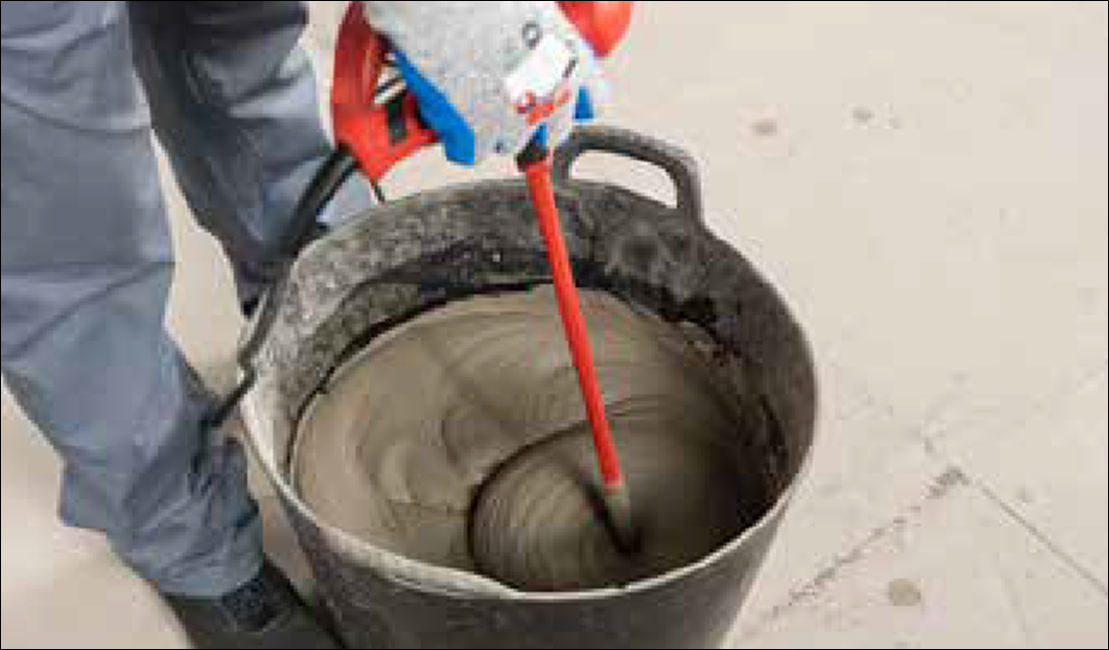
Follow the manufacturer’s recommendations and prepare the mixture using an electric mixer to ensure a homogeneous product with no lumps.
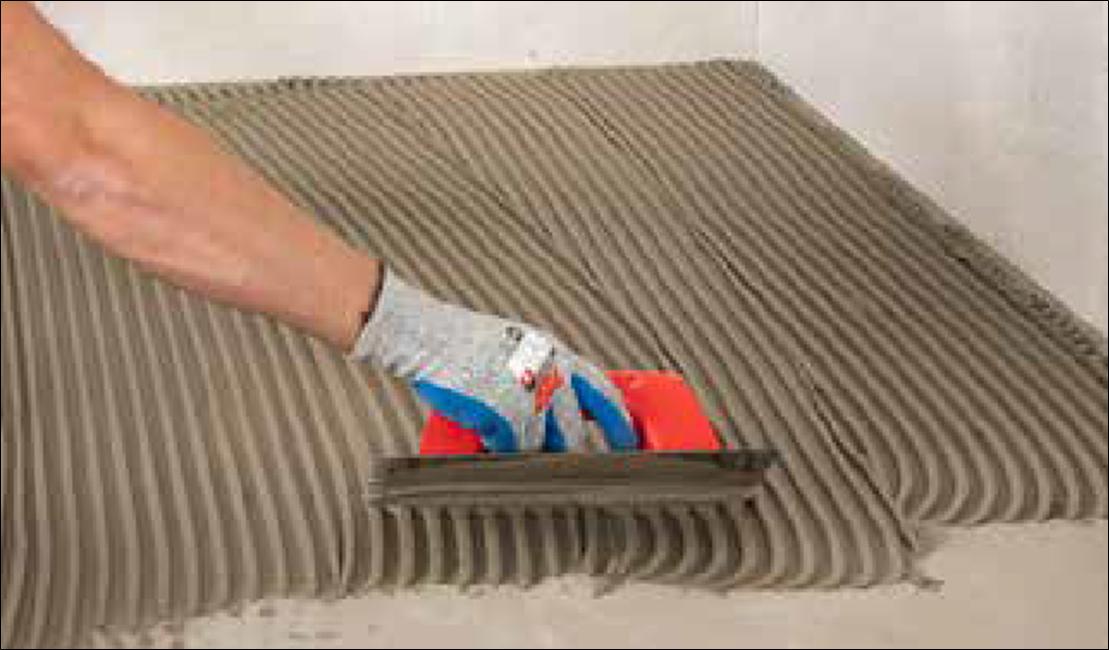
Spread the adhesive over the installation surface and the underside of the tile (thin-bed technique with back-buttering), working in small sections. First spread the adhesive across the substrate with a 1/4″ – 3/8″ trowel and then “comb” it (spread the adhesive evenly) with a 3mm (1/8″) notched trowel on the back of the tile.
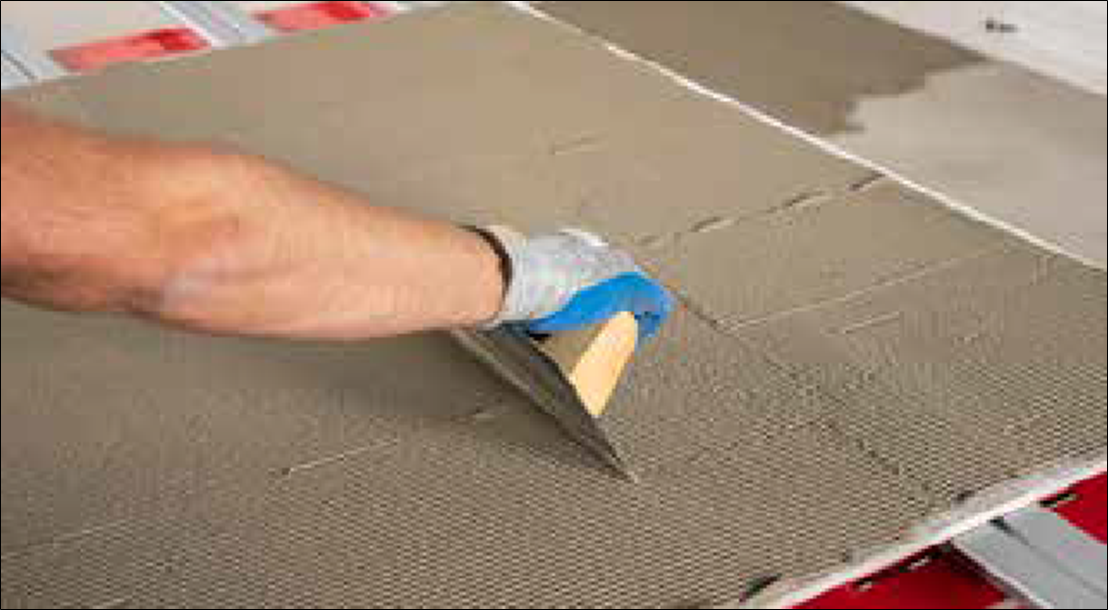
To help trapped air escape, the adhesive should be spread in the same direction on both the back of the tile and on the substrate, aligning with the direction of the shorter side of the tile.
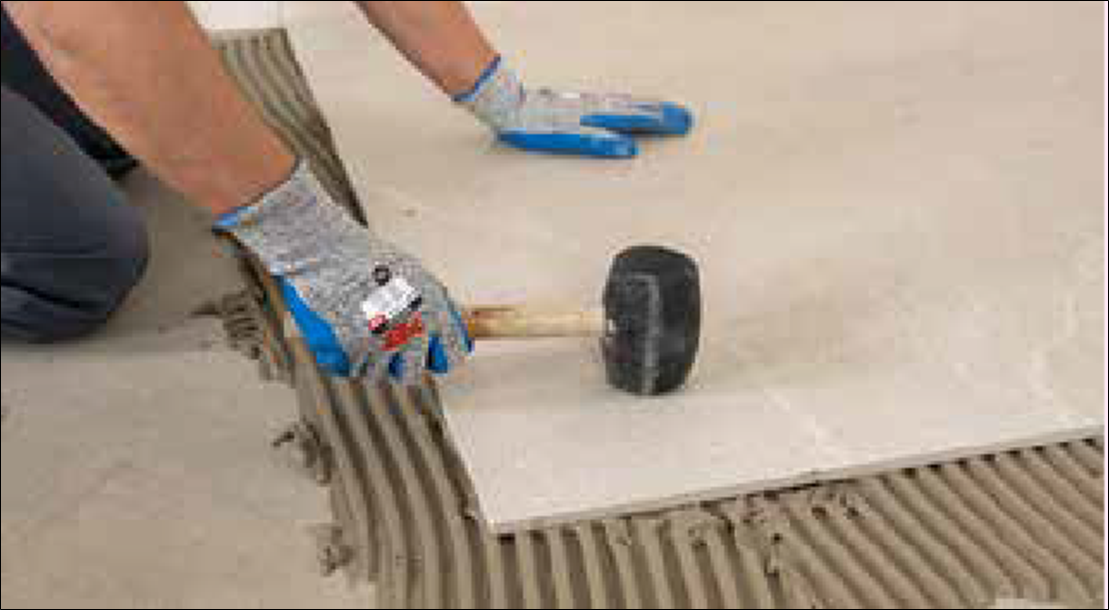
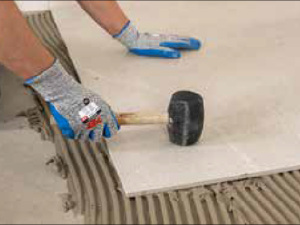
Tap each tile vigorously with a rubber mallet or vibrating compactor to ensure they are properly bedded.
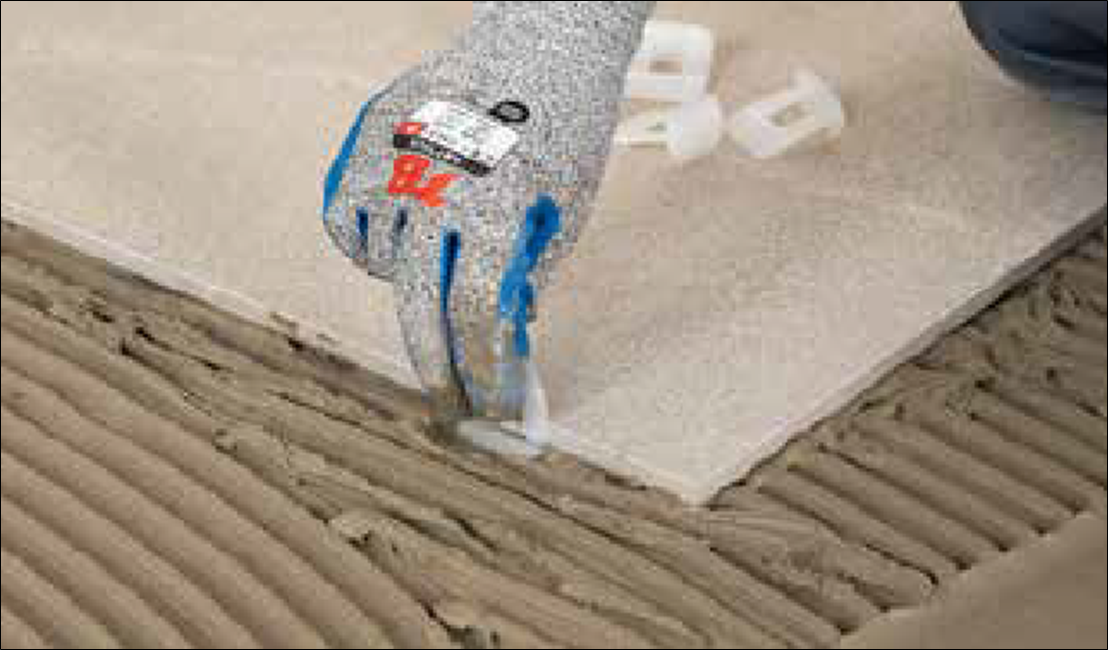
Lay the tiles flat exerting a slight pressure and insert the clips at the ends of the tile (approx >2″ from the edge).
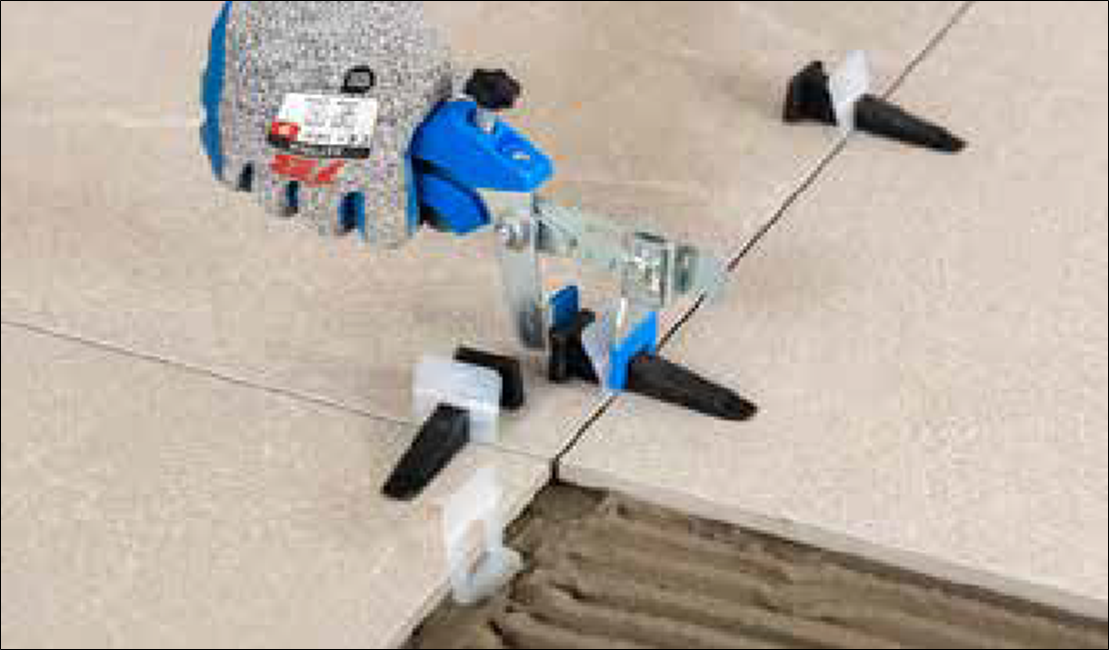
After laying the adjacent tile, manually insert the wedges into the clips. Then, using the appropriate tool exert maximum pressure to level the tile before the adhesive sets.
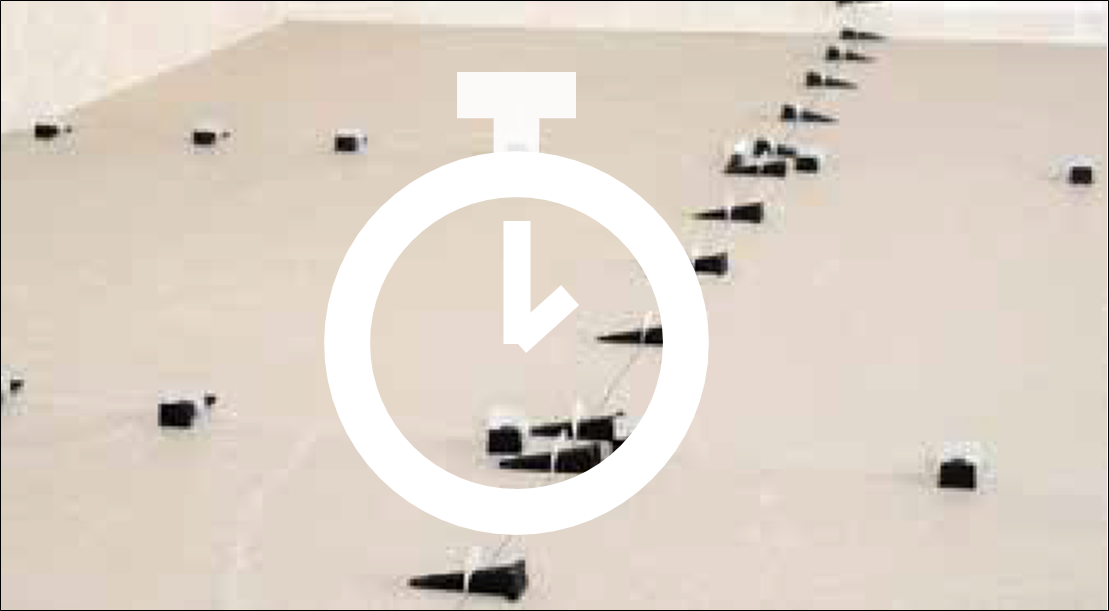
Periodically lift up installed tiles to check for full coverage of the adhesive, which will guarantee a good bond in the future. Wait at least 24 hours after finishing laying the floor before beginning to fill the joints.
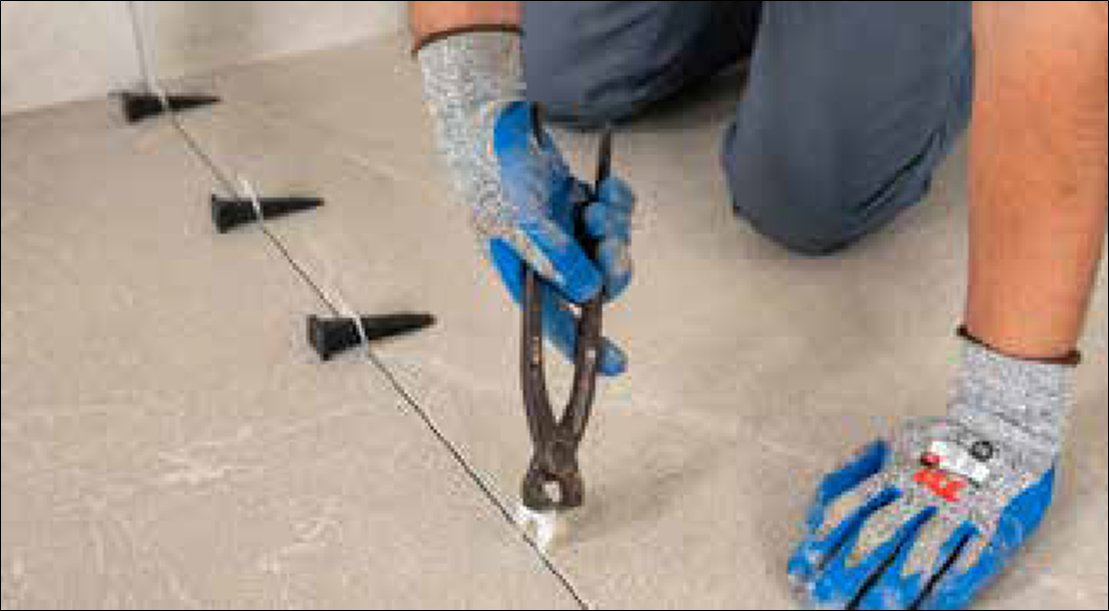
Remove the clips one by one with pliers to ensure the correct extraction (do not hit the wedges).
- When placing the clips, keep a distance of 2″ to 3″ mm to the edge of the tile.
- The recommended distance between clips is <10 “
- For floors with radiant heating, check that the heating is turned off 48 hours before laying the tile and do not turn it on again until 7 days after the completion of the grouting, to avoid drying out the adhesive and the grouting.
- Take precautions against any weather conditions that may impair the proper setting of the material.
APPLICATION OF THE GROUT
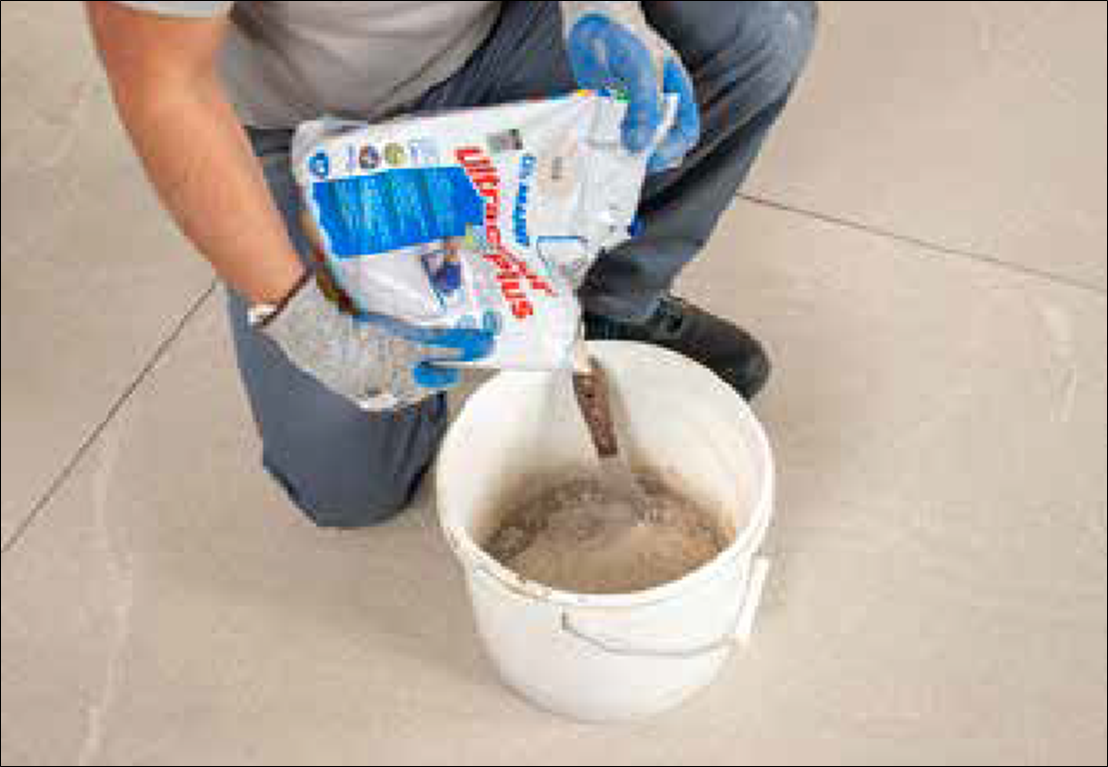
Select the grouting material to be used depending on the width and the required physical and chemical properties.
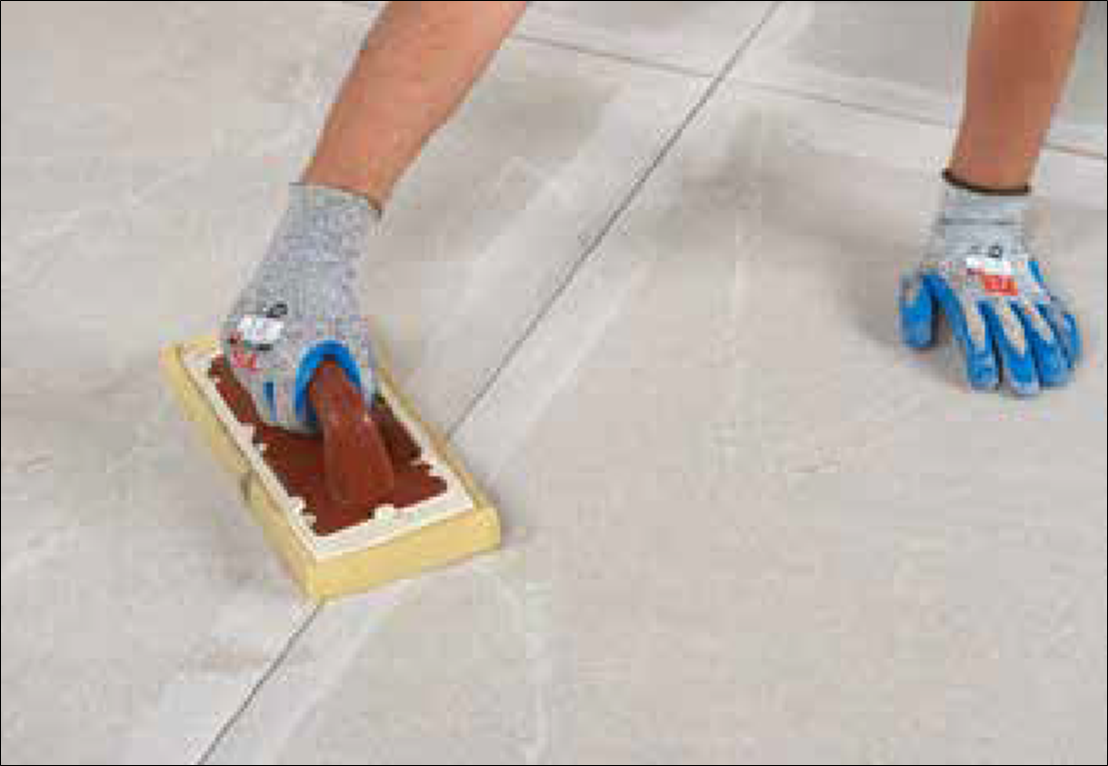
- Apply the grout with a rubber grout float.
- Clean the joints with a wet sponge or similar before the material sets.
INSTALLATION ON INDOOR WALLS
- The surface must be completely dry and clean of grease, oil and dust, with no traces of cement, resin, paint, or loose particles.
- The surface should be perfectly flat. It is essential to fill in any uneven parts using suitable products to ensure it is plumb.
- It must be compact, stable, with no cracks and have set correctly. If the substrate is unstable or has slight cracks, the use of an anti-fracture membrane between the substrate and the tile is recommended.
- It should have the necessary strength and mechanical resistance for the stresses it will have to withstand in the intended use.
- To install on top of existing tiles, make sure that they are solid, stable and fixed to the wall. Before installing the new tile, the existing tile should be properly cleaned.
- It is advisable to use a grout joint of at least 1/16″, for both rectified and unrectified tiles, and to respect all movement joints.
- Follow the manufacturer’s recommendations and prepare the mixture using an electric mixer to ensure a homogeneous product with no lumps.
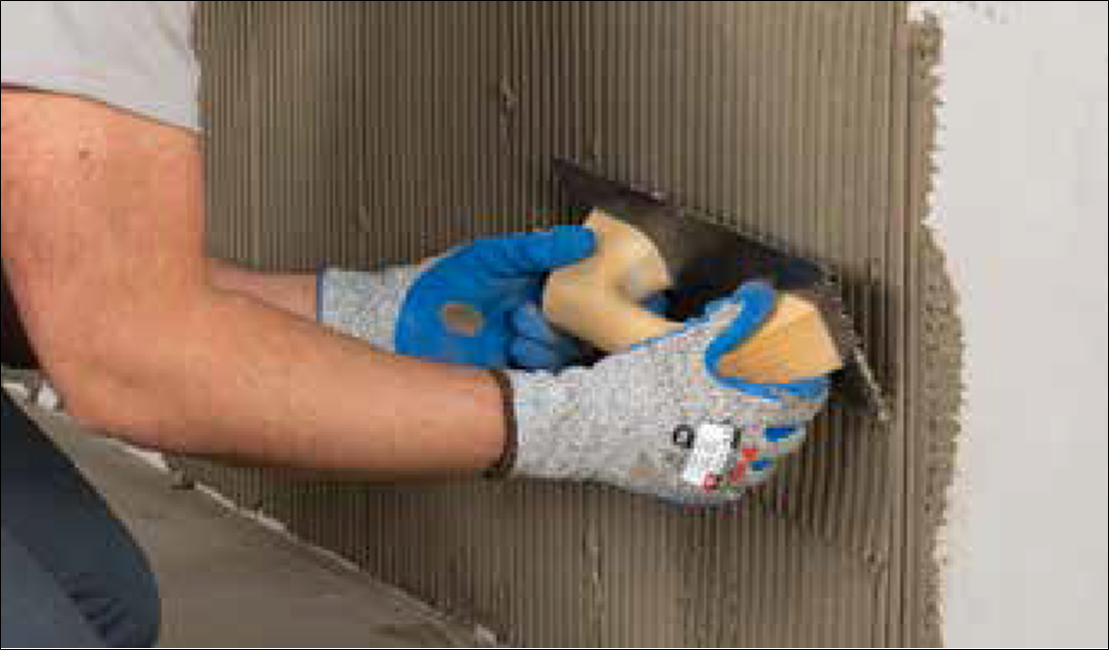
It is advisable to apply adhesive in small sections, spreading it evenly with a 1/4″ – 3/8″notched trowel.
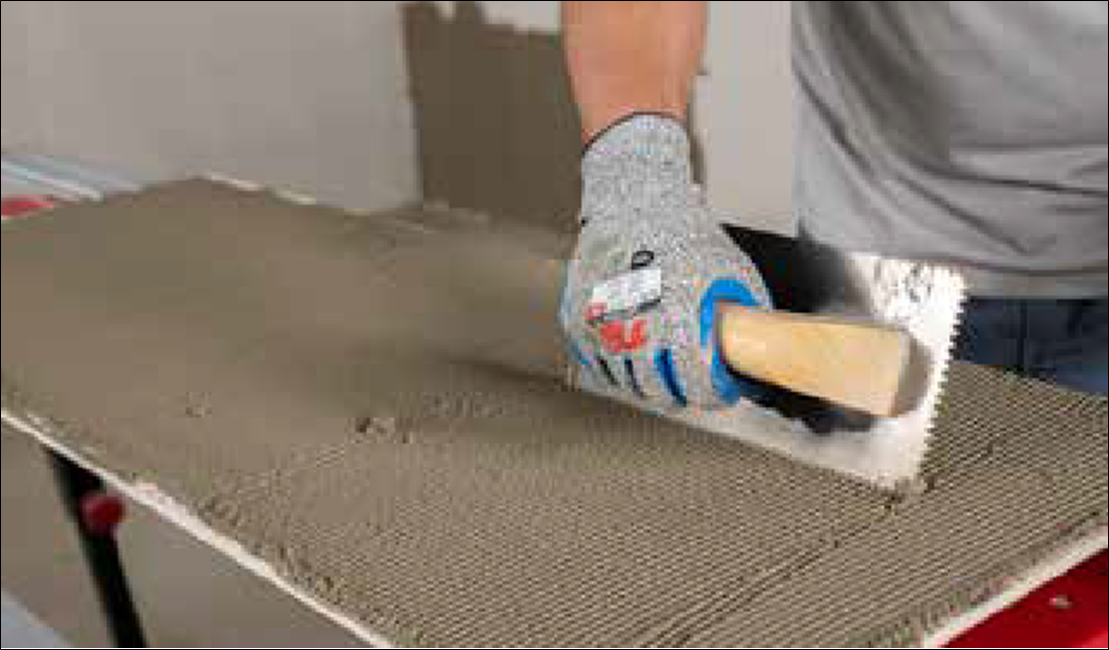
The use of the thin-bed technique with back-buttering is recommended; do not use spot bonding to lay tiles. Use a 1/8″ notched trowel
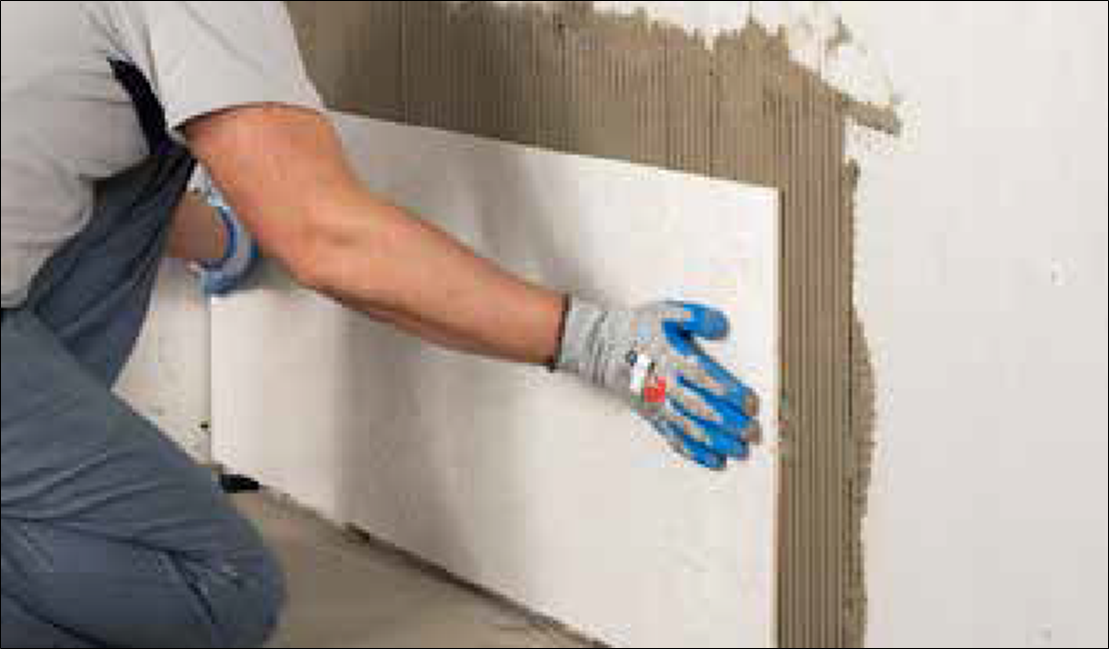
Place the tiles on the fresh adhesive, pressing them down and making a light back-and-forth movement to ensure maximum coverage of the underside, respecting the intended grout joints.
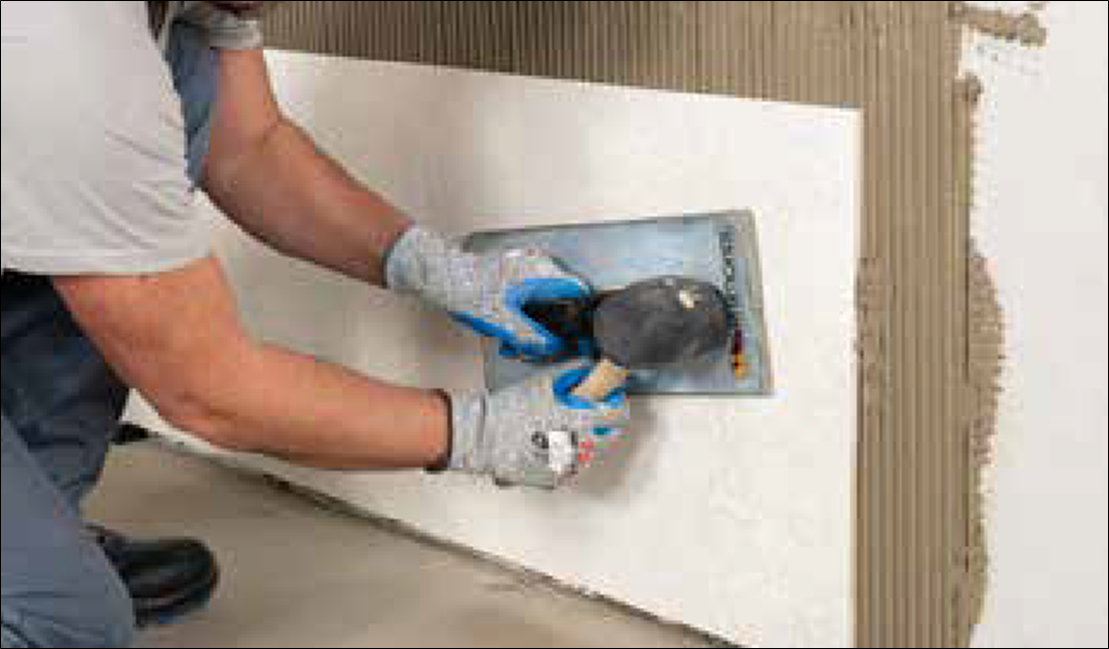
Once laid, settle the tiles into place using a clean rubber pad, and tapping it with a rubber mallet.
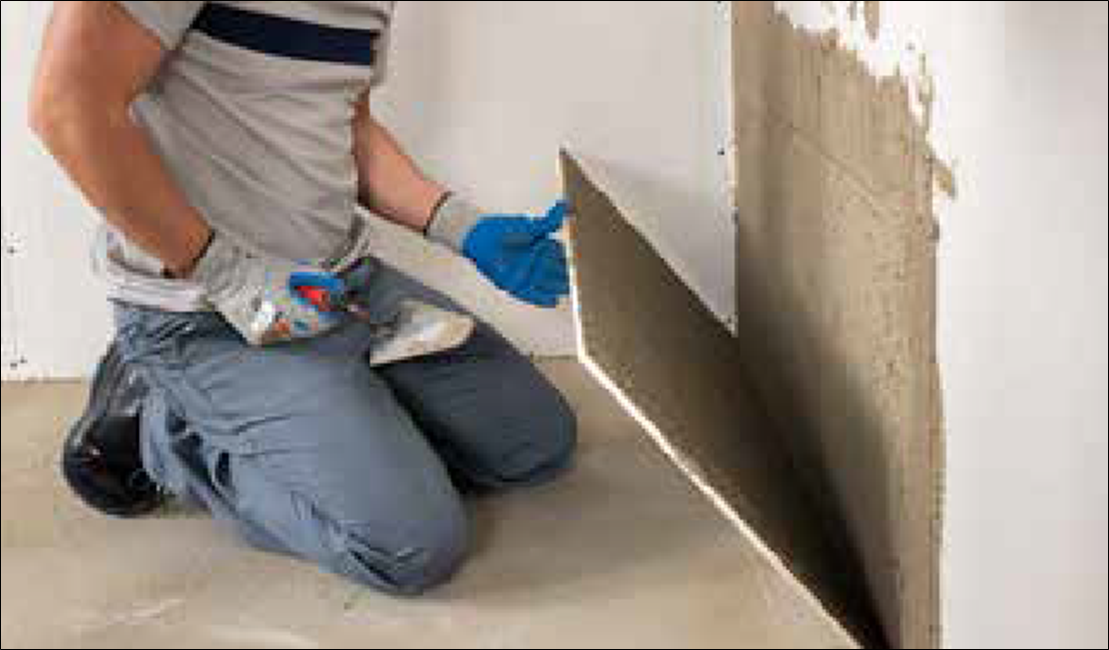
Place the tiles on the fresh adhesive, pressing them down and making a light back-and-forth movement to ensure maximum coverage of the underside, respecting the intended grout joints.
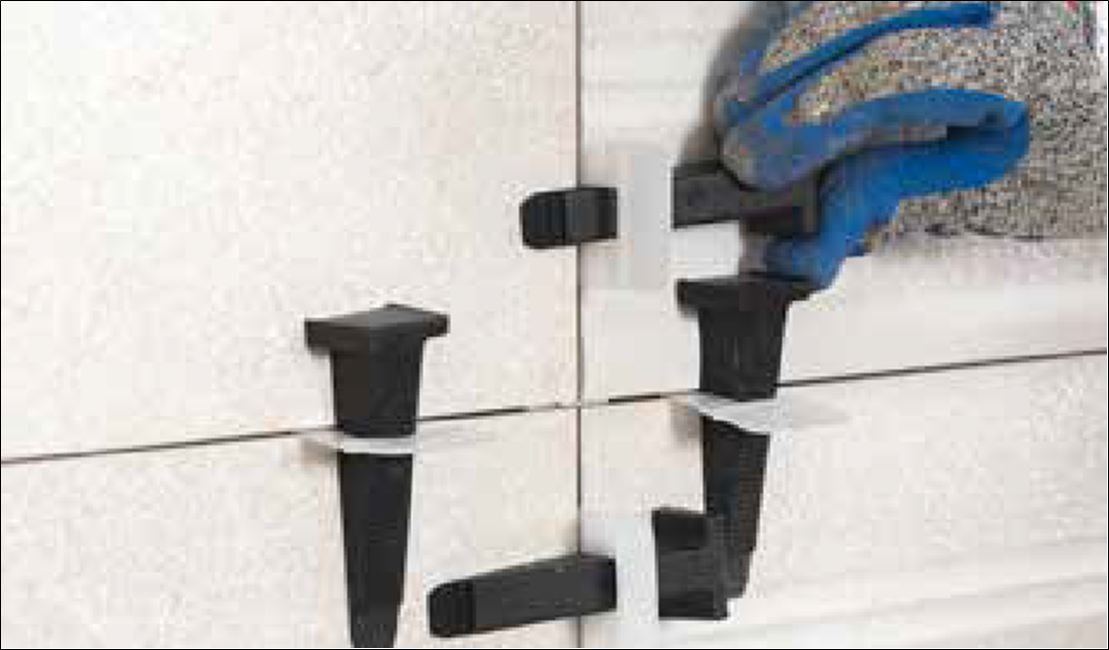
- When placing the tiles, manually insert the wedges into the clips.
- Wait at least 24 hours after finishing laying the floor before beginning to fill the joints.
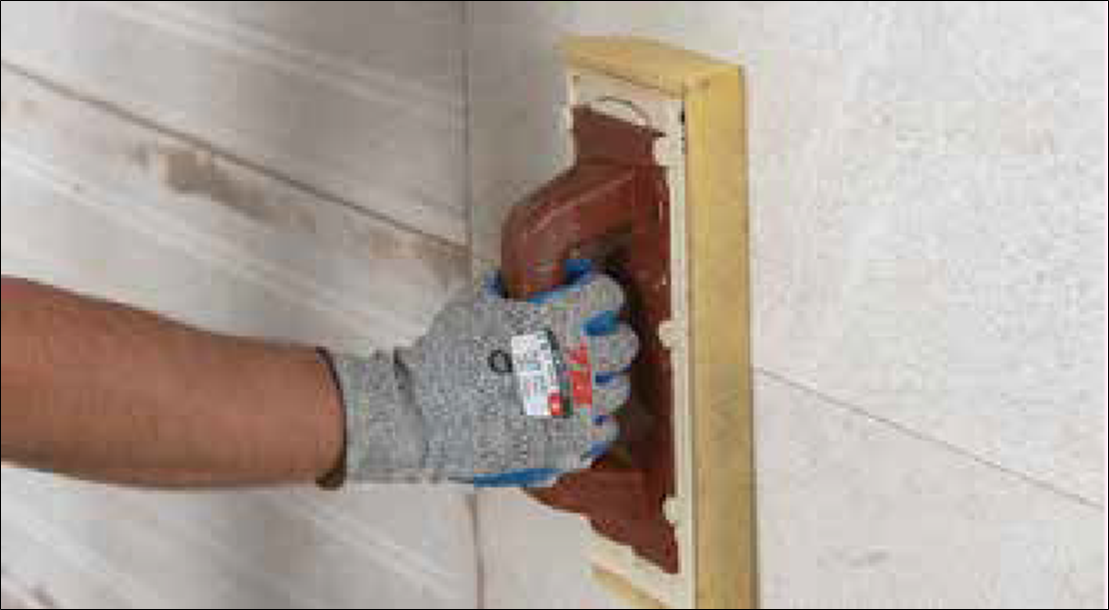
- Select the grouting material to be used depending on the width and the required physical and chemical properties.
- Apply the grouting material using a rubber grout float.
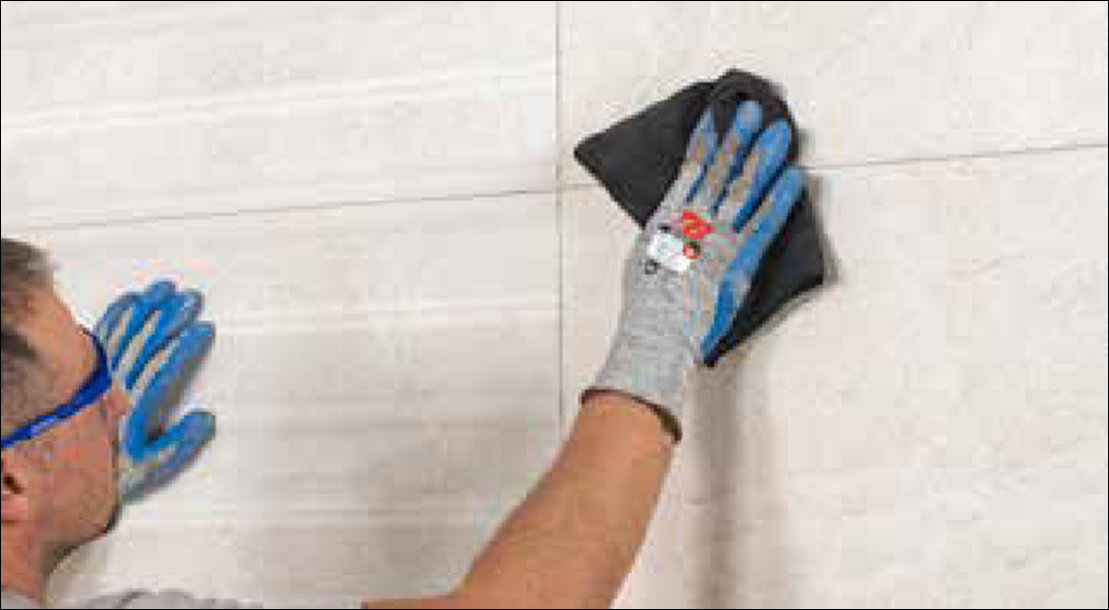
Clean the tile with water and cleaning products, using cloths, sponges and plastic brushes.
- Under no circumstances should a ceramic till be installed without a joint, or “butt-jointed”.
- Use spacers to ensure regular joint size.
- Tiles should not be immersed in water.