

How Much Does Tile Shipping Cost?Is Free Shipping Really Free?
Why Tile Shipping Is Expensive
In 2016, we offered free delivery for a project in Chicago that required two full containers of marble tile. We decided to bypass our Miami warehouse and send the containers directly from the manufacturer in Vietnam. As good as the idea sounded, it turned into an expensive lesson.
First, the containers arrived in New York. They were then transported to a rail station and sent to Chicago. Once they arrived, we had to find a warehouse to unload them before delivering the marble tiles on a flatbed truck equipped with a piggyback forklift.
After paying the ocean and rail freight, port handling, warehouse labor, inland transportation, and final delivery costs, the total shipping expense exceeded our profit on the sale.
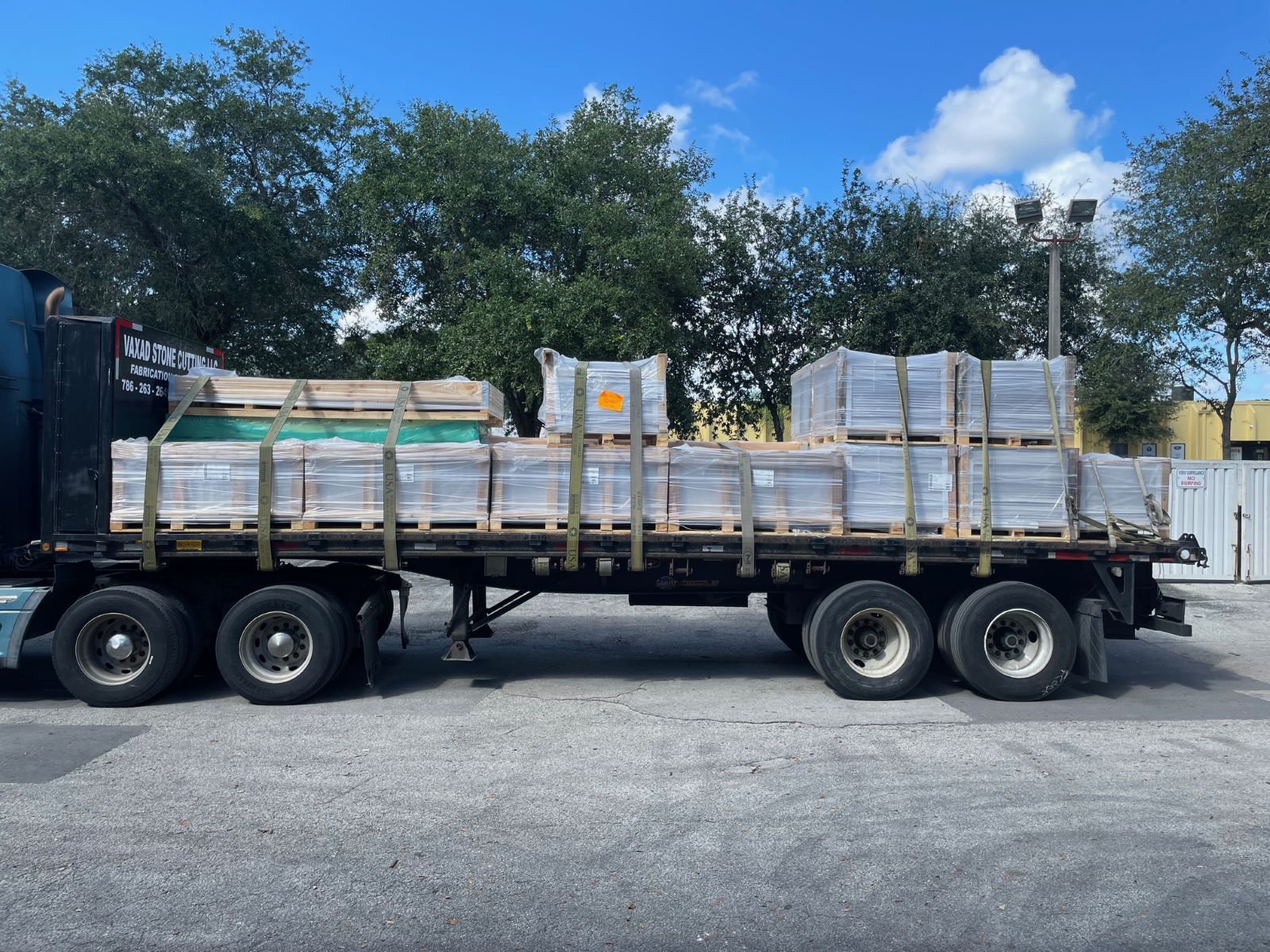
Shipping tiles is not cheap because tiles are heavy and must be transported on large pallets.
An order of 10 boxes may occupy about 12 cubic feet and weigh close to 1,000 lb. A full pallet may occupy about 32 cubic feet. Tile shipments become heavy and bulky quickly, which is why they must be palletized and transported by freight carriers rather than ordinary parcel services..
A shipment of this size may cost approximately $1,500–$1,800 from Miami to the New York area or $2,500–$3,000 to California with residential delivery services.
Shipping tile is very different from shipping a box of clothing sold online, where a $5–$20 postal charge can often be absorbed into the sale price.
First, the containers arrived in New York. They were then transported to a rail station and sent to Chicago. Once they arrived, we had to find a warehouse to unload them before delivering the marble tiles on a flatbed truck equipped with a piggyback forklift.
After paying the ocean and rail freight, port handling, warehouse labor, inland transportation, and final delivery costs, the total shipping expense exceeded our profit on the sale.
Shipping tiles is not cheap because tiles are heavy and must be transported on large pallets.
An order of 10 boxes may occupy about 12 cubic feet and weigh close to 1,000 lb. A full pallet may occupy about 32 cubic feet. Tile shipments become heavy and bulky quickly, which is why they must be palletized and transported by freight carriers rather than ordinary parcel services..
A shipment of this size may cost approximately $1,500–$1,800 from Miami to the New York area or $2,500–$3,000 to California with residential delivery services.
Shipping tile is very different from shipping a box of clothing sold online, where a $5–$20 postal charge can often be absorbed into the sale price.
How Tiles Are Usually Shipped
Tiles are commonly shipped by LTL, or less-than-truckload freight. With LTL shipping, a 53-foot dry van carries several different shipments along with your tile.
Although LTL is one of the most affordable ways to transport tile, the pallets may be transferred between trucks three or four times before reaching their destination. This can cause delays and occasionally result in damage.
A shared truck, also known as partial-truckload delivery, is often a faster and safer alternative. The same truck that picks up your tile delivers it directly to you without repeatedly transferring the pallets between terminals and trailers.
Shared trucks usually do not have liftgates, so the customer may need to rent a forklift for unloading. Renting a forklift can still be considerably less expensive than paying residential delivery and liftgate fees.
When unloading equipment is available, shared-truck delivery is often the fastest, safest, and most economical way to ship tile.
Although LTL is one of the most affordable ways to transport tile, the pallets may be transferred between trucks three or four times before reaching their destination. This can cause delays and occasionally result in damage.
A shared truck, also known as partial-truckload delivery, is often a faster and safer alternative. The same truck that picks up your tile delivers it directly to you without repeatedly transferring the pallets between terminals and trailers.
Shared trucks usually do not have liftgates, so the customer may need to rent a forklift for unloading. Renting a forklift can still be considerably less expensive than paying residential delivery and liftgate fees.
When unloading equipment is available, shared-truck delivery is often the fastest, safest, and most economical way to ship tile.
How the Delivery Location Affects the Cost
A commercial location with a loading dock or forklift is usually less expensive to serve than a residence requiring a liftgate.
Residential delivery, liftgate service, delivery appointments, and other special services can increase the carrier’s rate. Any services included in our shipping quote are explained before the order is shipped.
Customers receiving tile at a house or jobsite may save money by renting a forklift. However, this may not be practical for apartments, condominiums, or buildings with limited access. In those cases, residential delivery with a liftgate may be the better option.
Residential delivery, liftgate service, delivery appointments, and other special services can increase the carrier’s rate. Any services included in our shipping quote are explained before the order is shipped.
Customers receiving tile at a house or jobsite may save money by renting a forklift. However, this may not be practical for apartments, condominiums, or buildings with limited access. In those cases, residential delivery with a liftgate may be the better option.
Is Free Shipping Really Free?
A $1,500–$3,000 freight bill does not disappear because a website calls the shipping free. The cost must be recovered somewhere, usually through a higher tile price, a larger profit margin, or other charges built into the order.
When comparing tile prices, look at the total delivered cost. A vendor charging freight separately may still offer a better final price than one advertising free shipping.
When comparing tile prices, look at the total delivered cost. A vendor charging freight separately may still offer a better final price than one advertising free shipping.
Why Buying Tile Online Can Still Cost Less
In many states, tile sold by local retailers may already include substantial transportation and handling costs.
South Florida is one of the country’s major entry points for imported tile, with large quantities arriving directly from manufacturers in Spain, Italy, Turkey, and other countries.
In areas with less direct importing, tile may first be shipped to a distributor in another state, stored in a warehouse, and then transported again to the local retailer. Each step adds freight, handling, storage, and markup to the final price.
This is why buying tile from South Florida can remain economical even after nationwide shipping is added. The important comparison is not the tile price or shipping charge by itself, but the total delivered cost. Please note that our minimum order requirement is 155 sq ft.
South Florida is one of the country’s major entry points for imported tile, with large quantities arriving directly from manufacturers in Spain, Italy, Turkey, and other countries.
In areas with less direct importing, tile may first be shipped to a distributor in another state, stored in a warehouse, and then transported again to the local retailer. Each step adds freight, handling, storage, and markup to the final price.
This is why buying tile from South Florida can remain economical even after nationwide shipping is added. The important comparison is not the tile price or shipping charge by itself, but the total delivered cost. Please note that our minimum order requirement is 155 sq ft.