

Where Your Tile Is Made Matters
What Is the Most Important Factor That Defines the Price of a Tile?
Where your tile is made matters.
Not because one country is automatically good and another country is automatically bad. That would be too simple. It matters because every tile-producing country has a different history, cost structure, raw-material access, energy cost, domestic market, factory culture, environmental standard, quality-control expectation, and level of industry maturity.
Those differences become even more important with large format porcelain tiles.
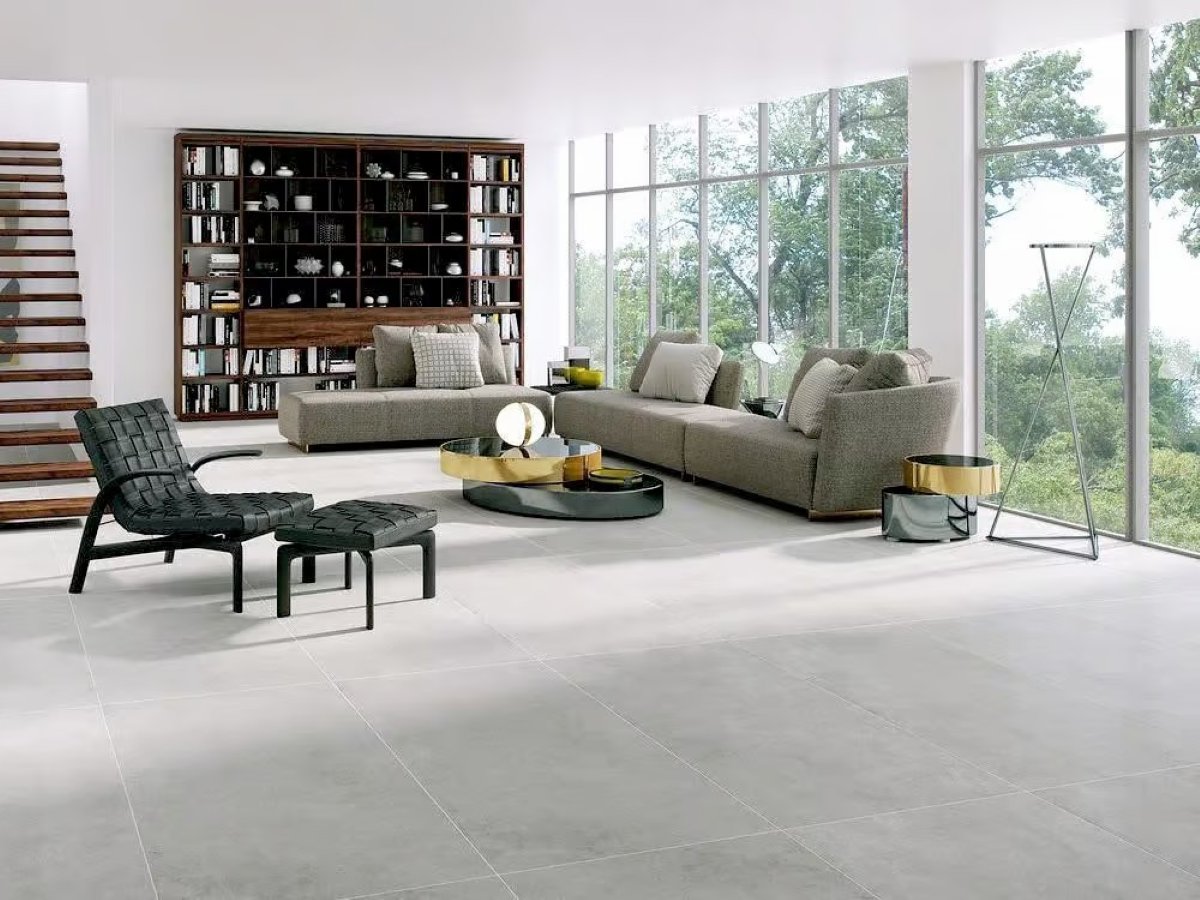
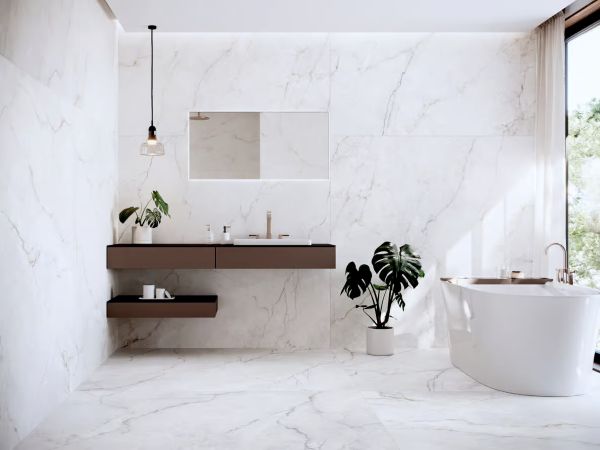
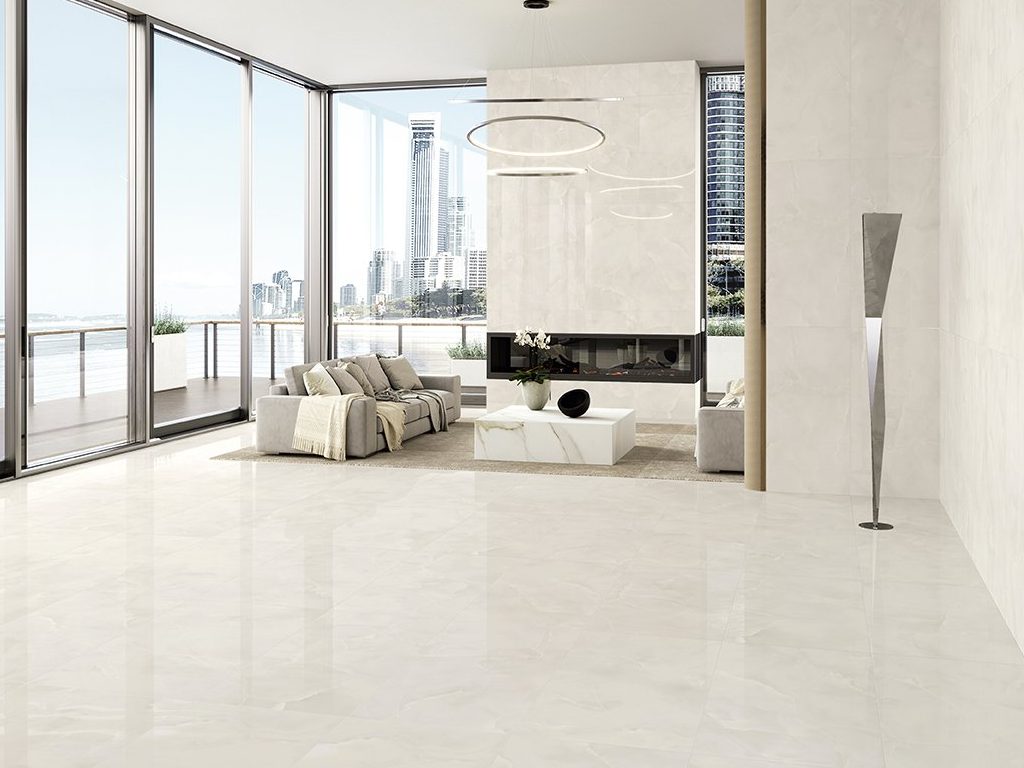
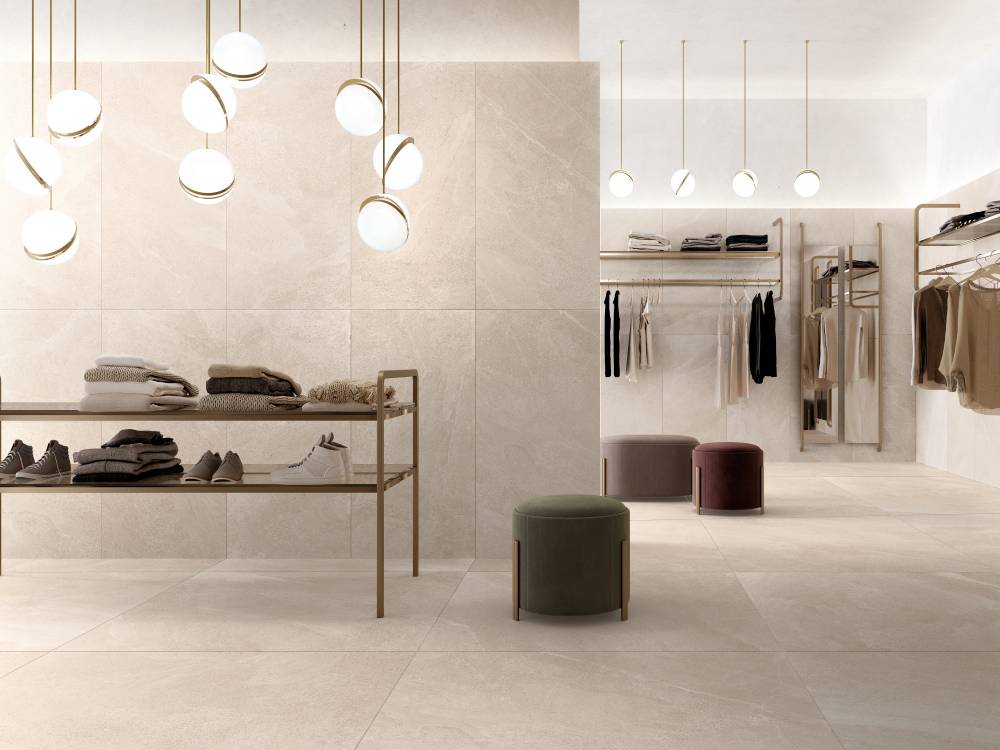
A 24×48, 48×48, or 63×63 porcelain tile may look beautiful in a photo. But the real question is not only how it looks. The real question is how it was made, how flat it is, how strong the body is, how well it is packed, how it handles freight, and how confidently it can be installed.
That is where country of origin starts to matter.
Large Format Tile Leaves Less Room for Mistakes
This is especially true with very large sizes such as 63×63 porcelain tiles.
At that size, flatness becomes one of the most important issues. A small amount of bowing or movement in the body may not be a major problem in a smaller tile, but on a 63×63 tile, it can create serious installation difficulty. Large tiles must be flat enough, stable enough, and consistent enough from piece to piece.
The body also matters. Many 63×63 porcelain tiles are around 8 mm thick. If the tile were made much thicker, each piece would become extremely heavy and difficult to handle. Even at 8 mm, these tiles are already hard to unload, move, cut, and install.
So factories have to balance two things: they need to keep the tile thin enough to handle, but strong and dense enough to survive freight, cutting, handling, and installation.
That is not easy.
This is why we do not compare large format porcelain only by price per square foot. A cheaper 63×63 tile may look similar in a picture, but the body strength, flatness, edge quality, packaging, and installation confidence can be very different.
Flatness Is Not a Small Detail
Good factories control this movement better, but they cannot completely remove it. That is why tile standards allow a certain amount of warpage or flatness tolerance. The larger the tile gets, the harder it becomes to keep that movement under control.
For large format tile, flatness is not just a technical detail. It directly affects the installation.
A large tile that is not flat enough can be difficult to set properly. It can increase the risk of lippage, make the installer’s job harder, and create problems that the customer may notice after the job is finished.
This is one of the biggest reasons we are careful with large format porcelain. A tile can have a nice surface design and still be a poor choice if the body is not stable enough for the size.
The bigger the tile, the more important the factory becomes.
Price Alone Does Not Tell the Whole Story
The final cost of porcelain tile is shaped by many things: raw materials, energy, body formulation, machinery, factory scale, firing process, polishing or finishing quality, quality control, packaging, freight, currency exchange, brand positioning, and distribution.
That is why very large price gaps should make buyers ask questions.
For example, if a 24×48 polished porcelain tile from one country is offered at a fraction of the price of a comparable Turkish or Spanish tile, the difference is usually too big to explain by labor cost alone.
At some point, we have to ask what is different.
Is the body as dense? Is the tile as flat? Is the surface quality as consistent? Are the edges stronger? Is the sorting as strict? Is the packaging strong enough? Will it survive LTL freight? Will it cut cleanly? Will the installer have problems?
This does not mean every low-priced tile is bad. It also does not mean every expensive tile is good. But extremely low pricing in large format porcelain should make buyers ask better questions.
Green Standards and Compliance Also Matter
Tile factories do not only press and fire clay. They use raw materials, water, fuel, electricity, glazes, inks, polishing systems, packaging, and waste-management processes. Cleaner production, emissions controls, recycling systems, worker-safety rules, and environmental compliance all add cost.
This matters because two tiles can look similar in a showroom but come from very different production environments.
European manufacturers, American manufacturers, and many serious Turkish factories operate under stricter environmental, labor, and compliance expectations. Those standards can increase the cost of production, but they also tell us something about the seriousness of the factory and the long-term direction of the industry.
A very low-priced tile may be cheaper for many reasons. Sometimes it is lower labor cost, lower energy cost, cheaper raw materials, currency differences, or aggressive export pricing. But sometimes part of the price difference may also come from lower compliance costs, weaker environmental standards, or less investment in cleaner production.
That does not mean every expensive tile is environmentally perfect, and it does not mean every inexpensive tile is irresponsible. But green standards and compliance are part of the real cost of manufacturing. When comparing tile prices, they should not be ignored.
Industry Maturity Matters
It takes decades for an industry to build standards, train technicians, improve raw-material control, upgrade machinery, develop export discipline, handle claims, and learn from demanding markets.
We have seen this in other industries too. Japanese cars were not always seen the way they are today. Korean cars were once considered cheap and less dependable, but their industry improved over time. Chinese porcelain tiles were not always strong either, but many Chinese factories became much better and more consistent over the years.
The same idea applies to tile.
Some countries have older and more mature ceramic traditions. Others grew quickly because they saw a manufacturing opportunity. Fast growth can create impressive production capacity, but consistency takes time.
That is why country of origin is not just a label on a box. It can tell you something about how mature the industry is, how the factories developed, and what kind of standards are common in that market.
Domestic Tile Culture Also Matters
That kind of domestic demand helps shape an industry.
When local customers understand tile and use tile heavily, factories improve over time. They learn what works, what fails, what installers complain about, and what customers expect. That creates a different kind of manufacturing culture.
Some other countries expanded more aggressively because they saw global demand and export opportunity. That does not mean they cannot make good tile. But an industry that grows through fast export expansion may not develop consistency in the same way as an industry built over decades through domestic use, technical experience, and mature customer expectations.
Spain, Italy, and Turkey
Spain produces many excellent porcelain tiles as well, but Spanish factories are in a difficult position. They operate with many European costs, similar to Italy, but they usually cannot charge the same premium as Italian brands. That puts Spanish producers under more price pressure.
Turkey is different. Turkish factories can benefit from strong ceramic regions, raw-material access, modern production, and a more competitive cost structure. When a serious Turkish manufacturer uses those advantages only to make cheap tile, the result may be average. But when they use the advantage to make better tile, the value can be excellent.
Some Turkish manufacturers produce very strong large format porcelain tiles. In our experience, certain high-end Turkish lines compare very well with many Spanish products, sometimes at a better price point.
That is not because of one simple reason. It is the result of raw materials, energy, machinery, factory investment, body formulation, quality control, and value positioning.
India, China, and Manufacturing Consistency
India has become a very large tile-producing country, especially for low-cost export material. There are many factories, many product levels, and very aggressive pricing.
But in our experience, Indian tile quality can vary significantly. We have seen and heard enough quality-control concerns to be cautious, especially with large format polished porcelain.
Our concern is not only long-term performance after installation. Once porcelain tile is properly installed, even a lower-cost tile may last for many years. The bigger concern is what happens before and during installation: chipping, breaking, freight survival, edge strength, cutting behavior, flatness, packaging, and consistency.
For this reason, unless we are shipping by partial truckload or another more controlled freight method, we are very cautious about sending certain Indian tiles out of state through regular LTL freight.
Chinese tiles are different. China has been producing and exporting tiles for longer, and although Chinese tiles were not always strong in the past, the industry improved over time. Overall, Chinese tiles are generally more consistent than Indian tiles in our experience.
Chinese and Vietnamese tiles also tend to be more expensive than Indian tiles, even though China is one of the most cost-efficient manufacturing countries in the world. That tells us something.
When Indian tile pricing is far below Turkish, Spanish, Chinese, or Vietnamese alternatives, the difference is too large to explain only by efficiency or labor cost. It raises questions about body quality, sorting, packaging, production standards, or long-term consistency.
Made in the USA
But again, the question is value.
When American-made porcelain tile reaches the same price range as high-end Italian tile, it has to be compared against premium European products on design, surface quality, body consistency, finish, and overall refinement.
In many cases, the average U.S.-made porcelain tile is not premium enough to compete with the best European products at the same price point. That does not mean American-made tile is bad. It means buyers should compare the actual product, not only the label.
Brazil
However, cheaper Brazilian export tiles do not always represent the best of what Brazil can produce.
When we first started dealing with porcelain tiles, we handled Brazilian material and were not impressed with the lower-priced products we saw. That does not mean Brazil cannot make good tile. It means the cheaper export segment did not always compare well with stronger Spanish, Italian, or Turkish alternatives.
As with every country, the factory and product line matter.
Budget Tiles Have a Place, But Shipping Method Matters
Not every project needs the most expensive tile. Budget tiles have a place, and we do sell them when we believe they can be used responsibly.
The important thing is honesty.
When a tile is priced as a budget option, it should be presented that way. A lower price may come with trade-offs in body quality, surface refinement, flatness, edge strength, packaging, shade consistency, or freight durability. That does not always mean the tile is bad. It means the customer should understand what they are buying.
Shipping method is also part of that decision.
Some budget tiles may be acceptable for local pickup, local delivery, or a more controlled transit option. But we do not like shipping budget tiles out of state by regular LTL freight unless we can find a safe transportation method. Large format tiles already require careful handling, and budget products may chip or break more easily during transit.
LTL freight can be rough. Pallets may move through multiple terminals, forklifts, transfers, and delivery trucks before they reach the customer. If the tile body or packaging is not strong enough, the risk of breakage becomes too high.
For that reason, we would rather refuse or limit certain shipments than send a product we do not trust to arrive safely.
Our goal is not to sell the most expensive tile. Our goal is to match the right tile to the right project, with the right expectations and the right delivery method.
The Real Cost of a Cheap Tile
If a project is 1,000 sq ft, 5,000 sq ft, or 10,000 sq ft, even a small difference per square foot becomes a big number. We understand that. Price matters.
But the true cost of tile is not only the price on the invoice.
The true cost includes freight damage, broken pieces, chipped edges, installation difficulty, lippage problems, cutting waste, claim delays, replacement material, and customer frustration.
This is especially true with large format porcelain. A 63×63 tile must be flat enough to install, strong enough to handle, consistent enough from piece to piece, and packed well enough to survive transportation.
If a tile fails in those areas, the savings may disappear quickly.
So, Does Country of Origin Guarantee Quality?
But country of origin still matters because it gives important clues.
It tells us something about the maturity of the industry, the raw-material base, the manufacturing culture, the quality-control expectations, the domestic market, environmental compliance, and the type of products that country is known for.
At Tiles & Stone Warehouse, we do not choose tiles only by color and price. We look at the body, finish, flatness, factory reputation, packaging, freight risk, and installation confidence.
That is why we are careful with sourcing.
We may lose some orders because we do not present every cheap tile as a premium product. Budget tiles have a place, but they should be sold with honest expectations.
Because once tile is installed, it becomes part of the home or business for many years.
And that is exactly why where your tile is made matters.